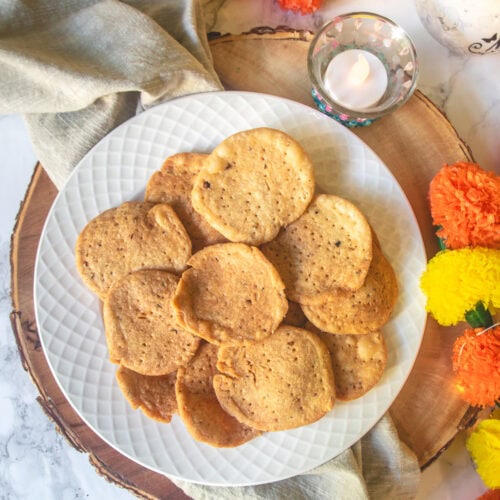
Farsi Puri Recipe
The best Farsi Puri recipe! This crispy, flaky, melt-in-your-mouth snack pairs perfectly with a hot cup of tea. It’s a traditional Gujarati snack that’s perfect for the Diwali festival!
Servings 10
Calories 257kcal
Ingredients
- 2 cups All purpose flour (Maida)
- ¼ cup Sooji (rava or semolina)
- ¾ teaspoons Salt
- 1 teaspoon Cumin seeds
- 2 teaspoon Black peppercorns crushed coarsely
- ⅓ cup Ghee (clarified butter) Melted, or semi-melted
- ⅔ cup Water
- Oil for deep frying
Instructions
Knead The Dough:
- In the bowl of a KitchenAid stand mixer, combine flour, semolina (sooji), salt, crushed black pepper, and cumin seeds. Stir the mixture gently with a spatula or spoon.
- Pour in the ghee. Then attach the dough hook. Set the mixer to a low speed. Let it run for approximately 3 minutes, allowing the oil to blend evenly with the flour.
- If you spot any larger clumps of the oil-flour mixture, use a spatula to break them up for an even texture.
- With the mixer on LOW, slowly add water around the edges of the bowl. The mixture will gradually come together and begin forming a dough.
- Once all the water has been added, pause the mixer and scrape down the sides and bottom of the bowl.
- Turn the mixer back on to low-medium speed until it forms a kind of dough. This dough may not form a single smooth ball. Because it is a stiff dough, it might come together in 2-3 clumps. Simply gather it by hand to form a cohesive dough ball.
- Cover the dough and let it rest for 15-20 minutes.
Roll Puris:
- After resting, knead the dough a few times (4-5) to smooth it out.
- Divide the dough into 2-3 portions and shape each portion into a cylinder. Cut each cylinder into small pieces, about 2 teaspoons in size.
- Roll each piece into a smooth ball, then flatten it gently between your palms to form a small disc.
- Roll each disc into a 3-inch circle, about ⅛-inch thick.
- Prick each puri 4-5 times with a fork to cover the surface.
Deep Fry Farsi Puri:
- Heat oil in a kadai over medium heat for deep frying.
- Once the oil is hot, lower the heat to low. Gently add a few farsi puris at a time without crowding, so they don’t stick together.
- Fry on low-medium heat until they turn golden brown and crispy.
- Use a slotted spoon to lift the farsi puris from the oil, allowing any extra oil to drain off. Transfer to a plate.
- While the first batch is frying, prepare the next batch by rolling and cutting the dough, so it’s ready to go.
Notes
- Moyan or Moyen: The right ghee-to-flour ratio is crucial to getting the flaky texture in farsi puri. So do not reduce the amount of ghee here. The dough should be stiff (not soft like roti, or chapati).
- Keep Heat Low-Medium: Always fry farsi puri on low to medium heat. Adjust the flame as necessary to maintain the right oil temperature. Frying on too high heat may cause them to brown too quickly while staying raw inside.
- Pricking the puri is essential. It keeps the puris from puffing up during frying, ensuring that they stay flat and develop that perfect flaky texture.
Nutrition
Calories: 257kcal | Carbohydrates: 23g | Protein: 3g | Fat: 17g | Saturated Fat: 5g | Polyunsaturated Fat: 1g | Monounsaturated Fat: 10g | Cholesterol: 15mg | Sodium: 177mg | Potassium: 50mg | Fiber: 1g | Sugar: 0.1g | Vitamin A: 8IU | Vitamin C: 0.01mg | Calcium: 11mg | Iron: 2mg
