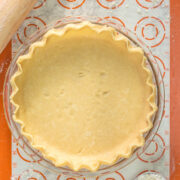
Food Processor Pie Crust Recipe
The Food Processor Pie Crust is a game-changer when making flaky, homemade pie crusts. This straightforward recipe creates a pie crust that's tender, rich, buttery, and flaky. With the help of a food processor, you can make the pie dough in less than 5 minutes.
Servings 1 Single Pie Crust
Calories 176kcal
Ingredients
- 1 ¼ cups All purpose flour (Maida)
- ½ teaspoon Salt
- ½ tablespoons Sugar
- ½ cup Unsalted butter Chilled, cut into small cubes
- ¼ teaspoon White distilled vinegar
- 2 tablespoons Ice cold water
Instructions
Making Pie Dough:
- Add all-purpose flour and salt to your food processor. Pulse the mixture for about 15 seconds until the flour and salt are thoroughly combined. Let it sit for a minute with the lid on and let the flour settle down. Then open the lid.
- Add the cold, cubed butter into the food processor and sprinkle vinegar over the butter.
- Pulse the mixture again, but this time only 8-9 times until you get breadcrumbs-like texture, with a few slightly larger butter pieces still visible.
- While the food processor runs, slowly pour two tablespoons of ice-cold water through the tube. Continue running the processor until the dough begins to come together. It should take about 30 seconds only.
- The dough won't form a solid ball, but it should easily come together when you pinch it. It shouldn't feel overly dry or too wet.
- Place a sheet of plastic wrap on your work surface and transfer the prepared pie dough onto it.
- Gather the dough and shape it into a ball. Then, flatten it slightly to form a disc shape.
- Wrap the dough in plastic wrap and refrigerate it for 30-45 minutes or until it's firm enough to roll out.
Rolling Pie Crust:
- Once the dough has chilled, remove it from the refrigerator and let it sit at room temperature for about 5 minutes.
- Lightly flour your work surface and rolling pin. I recommend using a silicone mat on your work surface.
- Begin rolling out the dough, turning and flouring frequently to prevent sticking, until you have a circle that's about 12 inches in diameter and ⅛ inch thick.
- While rolling, keep pinching the edges using your thumb and finger to seal them as they crack.
- Carefully transfer the rolled dough to a 9-inch pie dish with the help of roller.
- Press it gently into the bottom and sides of the dish.
- Trim any excess dough hanging over the edges, and shape the edges as desired. I have used my fingers to flute the edges.
- Chill the pie crust the fridge for about 20-30 minutes or until firm. Then from here, you can partially blind bake, or fully bake, or add filling bake as the recipe calls for.
Notes
- It's a good idea to double the pie crust recipe when preparing pies like classic apple pie or quiches that require both a top and bottom crust.
- Cold ingredients are the secret to a flaky crust. Ensure your butter is well-chilled, and use ice-cold water.
- Handle the dough as little as possible. Overhandling can lead to a tougher crust. It's okay if there are some visible butter pieces in the dough; these will melt during baking, creating those coveted flaky layers.
- Don't rush the chilling process. Let the dough rest in the fridge for at least 30 minutes.
- If the dough becomes too soft or sticky at any point during the rolling process, place it in the refrigerator for a short while to firm up before continuing.
- To prevent your pie crust from shrinking during baking, ensure it's well-chilled before filling and baking.
Nutrition
Calories: 176kcal | Carbohydrates: 16g | Protein: 2g | Fat: 12g | Saturated Fat: 7g | Polyunsaturated Fat: 1g | Monounsaturated Fat: 3g | Trans Fat: 0.5g | Cholesterol: 31mg | Sodium: 147mg | Potassium: 24mg | Fiber: 1g | Sugar: 1g | Vitamin A: 355IU | Calcium: 6mg | Iron: 1mg
