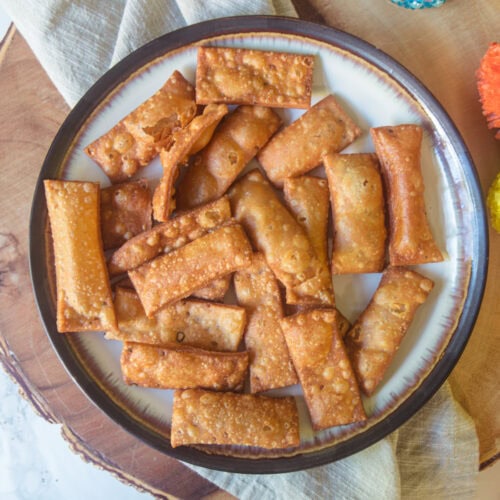
Namak Para Recipe (Namak Pare)
The BEST crispy, crunchy Namak Para! These are often made during Diwali, Holi, or Karwa Chauth festivals. Whether you’re snacking solo or sharing with friends and family, Namak Pare adds a delightful crunch to any moment!
Servings 8
Calories 303kcal
Ingredients
- 2 cups Whole wheat flour (Chapati atta)
- ¼ cup Sooji (rava or semolina)
- 1 teaspoon Ajwain (Carom seeds)
- ½ teaspoon Black peppercorns crushed
- ¾ teaspoon Salt
- ¼ cup Oil + more for frying
- ¾ cup Water
Instructions
Knead The Dough:
- In a KitchenAid stand mixer bowl, add atta, sooji, salt, crushed pepper, and ajwain. Mix everything with a spoon or spatula.
- Add oil to the flour mixture. Use the dough attachment. Turn on the mixer at low speed and let it run for about 3 minutes until the oil is well incorporated into the flour.
- If you notice any large clumps of oil-flour mixture, break them apart using a spatula.
- Keep the mixer running on LOW and drizzle water around the edges of the bowl. Gradually, the mixture will begin to clump together into a dough.
- Once all the water is added, stop the mixer and scrape down the sides and bottom of the bowl.
- Restart the mixer on low-medium until it forms a cohesive dough ball. Using your hands, gather and smooth out the dough. The namak para dough should be semi-stiff—not loose or soft like roti or chapati.
Roll & Cut:
- Divide the dough into two or three parts. Make a flattened disc and start rolling.
- Roll into a ¼ – inch thickness using a rolling pin.
- Cut into 2-3 inches long strips using a knife or pizza cutter.
Fry Namak Para:
- In a kadai, heat oil for deep frying over medium heat.
- Once the oil is hot, lower the heat to low. Add a few namak pare at a time. Avoid adding too many at once to prevent them from sticking together.
- Fry on low-medium heat until they turn golden brown and crispy.
- Use a slotted spatula to remove the namak pare from the oil, allowing excess oil to drain. Transfer them to a plate.
- While the first batch is frying, roll out the next dough ball, cut it, and keep it ready for the next frying batch.
Notes
- Adding oil to the flour is known as ‘moyan’ or ‘moyen’ in Indian cooking. The correct proportion of oil to flour is essential for achieving the flaky texture of namak para.
- Check Oil Temperature: To determine if the oil is ready for frying, drop a tiny piece of dough into the oil. It should sink to the bottom for a few seconds and then rise to the surface. This indicates the oil is at the perfect temperature. If the piece rises immediately, the oil is too hot, which is suitable for frying pakoras but not for crispy snacks.
- Maintain Low-Medium Heat: Always fry namak para on low to medium heat. Adjust the gas flame as needed to keep the oil at the right temperature. Frying on medium or high heat may cause them to brown quickly while remaining raw and soft inside.
Nutrition
Calories: 303kcal | Carbohydrates: 26g | Protein: 5g | Fat: 21g | Saturated Fat: 3g | Polyunsaturated Fat: 3g | Monounsaturated Fat: 15g | Sodium: 220mg | Potassium: 123mg | Fiber: 4g | Sugar: 0.1g | Vitamin A: 4IU | Calcium: 13mg | Iron: 1mg
