Eggless Peanut Butter Cookies

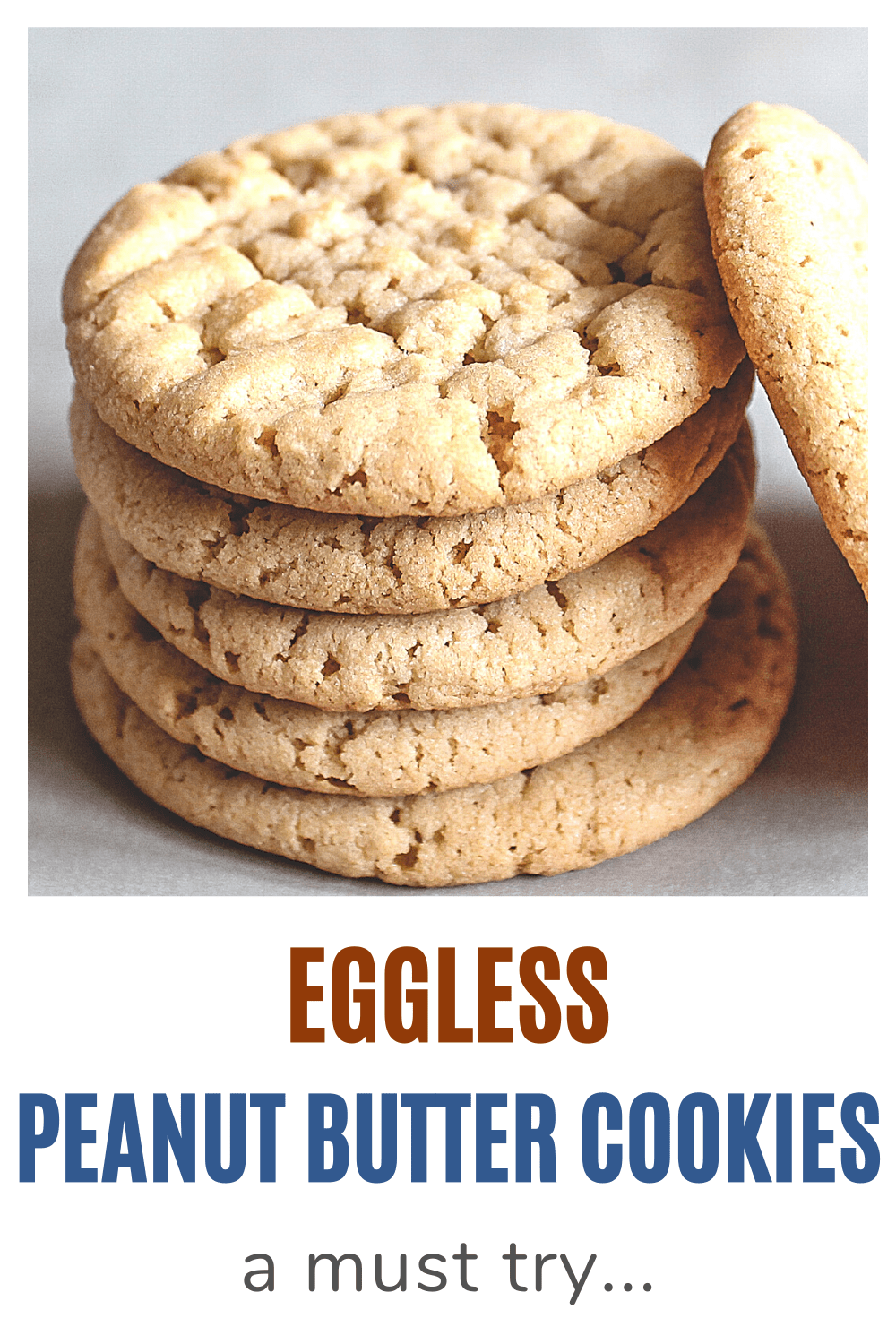
The BEST peanut butter cookies without eggs — crispy edges, soft and chewy centers, packed with real peanut butter flavor. Made with pantry staples and tested dozens of times in my kitchen. You won’t believe that these are EGGLESS peanut butter cookies.

One reader Kamie commented “We love these cookies! My youngest is anaphylactic to egg and I’ve been making these for at least five years now, they’re delicious! It’s hard to find good, eggless cookie recipes that are not vegan so thank you for this! ⭐⭐⭐⭐⭐”

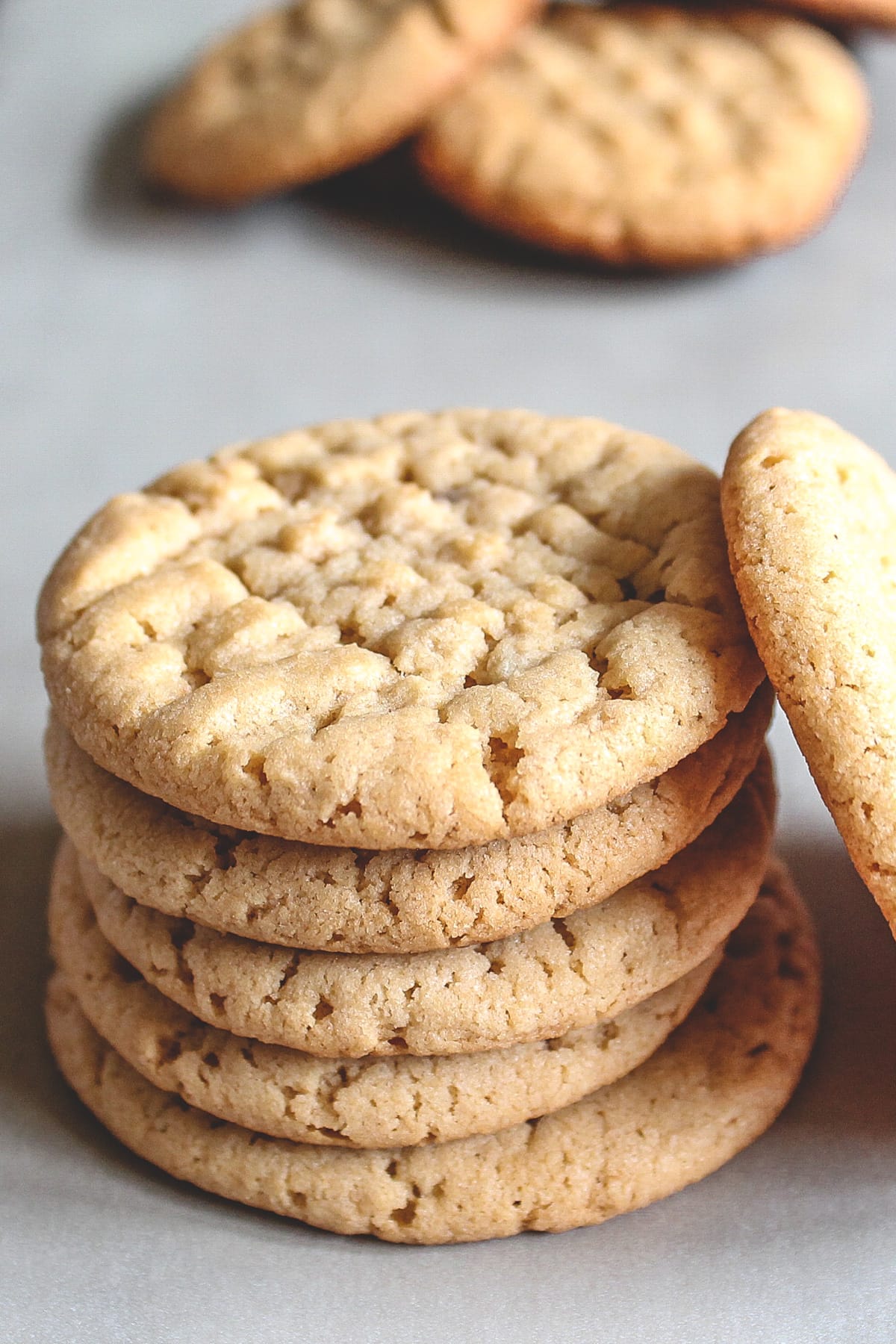
Stack of eggless peanut butter cookies.

You do not need eggs to make a great peanut butter cookie. I know that sounds bold, but after making these eggless peanut butter cookies more times than I can count, for my cookie-obsessed kids, egg-allergic friends, and just regular Tuesday cravings. I can say with full confidence: you won’t miss them. Not even a little.

These cookies have crispy edges, a soft and chewy center, the classic criss-cross fork pattern on top, and a rich peanut butter flavor that hits from the very first bite. They also happen to come together with ingredients you almost certainly already have.

  • Flavor: Buttery rich, salty-sweet packed with peanut butter
  • Texture: Crispy at the edges, soft and chewy in the center

💛 Why These Eggless Peanut Butter Cookies Work

I started baking eggless recipes in 2012 because so many of my readers – and people in my own life – either have egg allergies, follow a vegetarian diet that avoids eggs, or simply run out of eggs mid-craving. Over the years, I’ve tested dozens of egg-replacement approaches in cookies.

For this recipe, the combination of extra fat (butter + peanut butter) and a small amount of milk is all you need. The fat gives you richness and moisture; the milk adds just enough liquid to bind the dough without making it wet. The result is a dough that chills perfectly, bakes evenly, and produces cookies that are genuinely as good as egg-based peanut butter cookies.

⭐ Why You’ll Love This Recipe

  • No egg replacers needed — no flax eggs, no aquafaba, no specialty ingredients
  • Ready in just about 1 hour, including chill time
  • Uses simple pantry ingredients you already have
  • The dough freezes for up to 3 months — bake fresh cookies anytime
  • Easily customized with chocolate chips, chopped peanuts, or a chocolate drizzle
  • Perfect for anyone with an egg allergy, egg intolerance, or vegetarian diet
  • Beginner-friendly — no stand mixer required
  • Makes 24 cookies: great for bake sales, holidays, or after-school snacks

🧂 Ingredient Notes

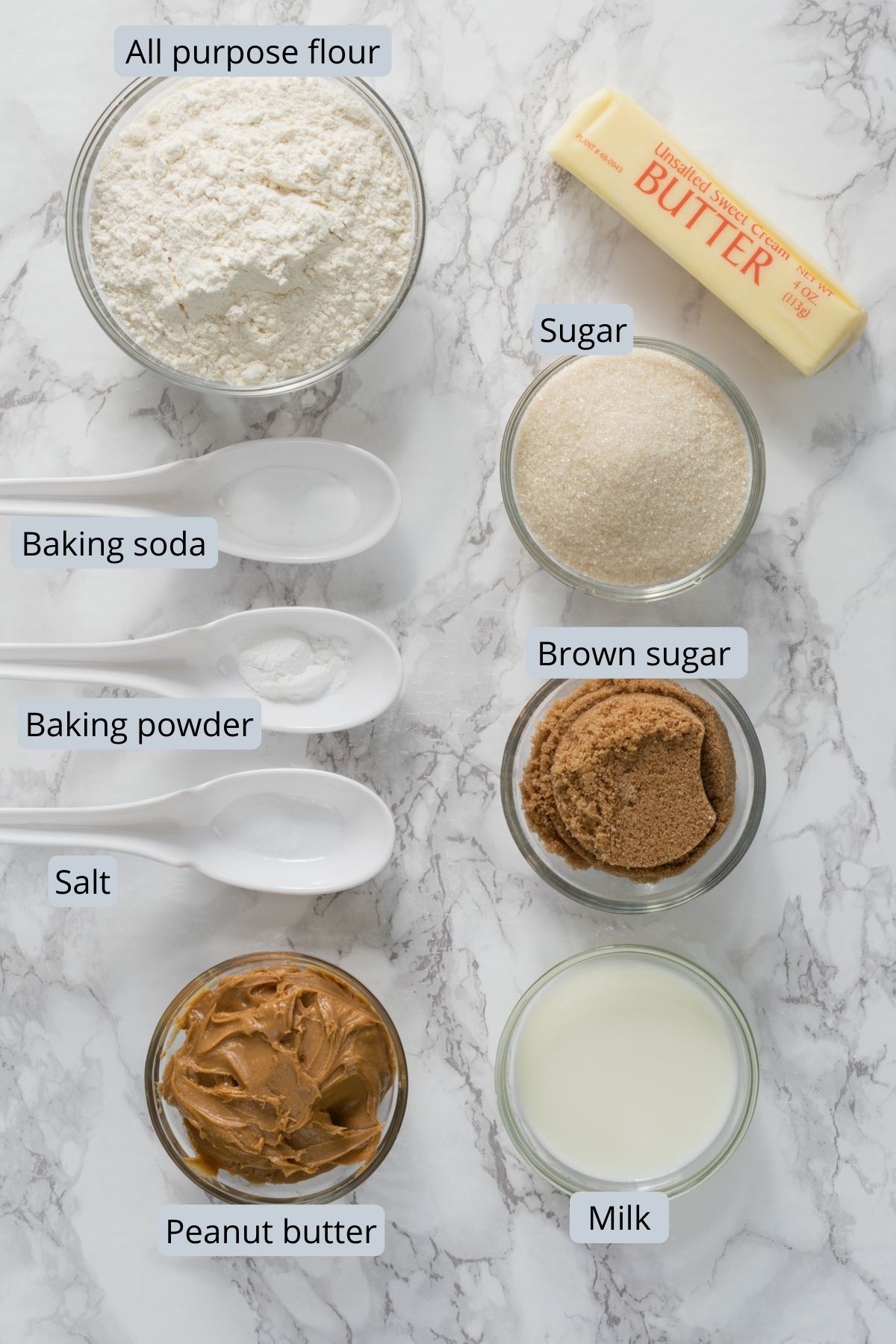
Complete list of ingredients and amounts is written in the recipe card below.

Ingredients used for eggless peanut butter cookies in individual bowls and spoons.
  • Peanut butter: This is the most important ingredient and the choice matters. 
  • Use a commercial, shelf-stable brand like Jif, Skippy, or Peter Pan. Look for jars labelled “zero trans fat” or “hydrogenated oil.” 
  • Avoid natural or old-fashioned peanut butter (the kind where the oil separates and you have to stir it). That separated oil makes the dough too soft and your cookies will spread flat. 
  • Creamy or chunky both work — creamy gives a smoother texture, chunky gives you little peanut pockets.
  • Unsalted butter, softened:
  • Use unsalted so you can control the salt level.
  • Softened means left at room temperature for at least 1 hour — not microwaved. Microwaved butter turns greasy and melty and will make your cookies spread too much and not cream properly with the sugar.
  • Light brown sugar + white sugar — Using both is intentional.
  • White sugar gives spread and crispness.
  • Brown sugar adds moisture, chew, and a subtle caramel note. 
  • All-purpose flour — Measure by spooning flour into your measuring cup and leveling off with a knife. Never scoop directly from the bag, that packs in too much flour and makes dense, dry cookies.
  • Milk — This is the egg substitute. It adds the moisture and just enough binding power to hold the dough together. Whole milk or low-fat both work.
  • If you want to make these dairy-free, unsweetened soy milk along with vegan butter works seamlessly (a reader confirmed this in the comments!).
  • Baking powder + baking soda — Both leaveners are used together. 

Tried this recipe? A star rating ⭐️ and a quick comment below help others (and me!) know how it went.

Eggless Peanut Butter Cookies

4.62 from 77 votes
Stack of eggless peanut butter cookies.
The BEST peanut butter cookies without eggs — crispy edges, soft and chewy centers, packed with real peanut butter flavor. Made with pantry staples and tested dozens of times in my kitchen.
Kanan
Prep Time 15 minutes
Cook Time 15 minutes
Chilling Time 30 minutes
Total Time 1 hour
Serving Size 24 cookies

US measuring cups are used (1 cup = 240 ml)

Ingredients

  • 1 ¼ cups All purpose flour (Maida)
  • ½ teaspoon Baking powder
  • ¾ teaspoon Baking soda
  • ¼ teaspoon Salt
  • ½ cup Unsalted butter, soften at room temperature
  • ½ cup White granulated sugar
  • ½ cup Light brown sugar
  • ½ cup Peanut butter
  • ¼ cup Milk

Instructions

  • Step 1 — Mix the dry ingredients
    Whisk together the flour, baking powder, baking soda, and salt in a medium bowl until fully combined. Set aside.
    TIP: Pre-mixing the dry ingredients ensures the leaveners are evenly distributed — skipping this step can result in cookies with uneven rise or salty bites.
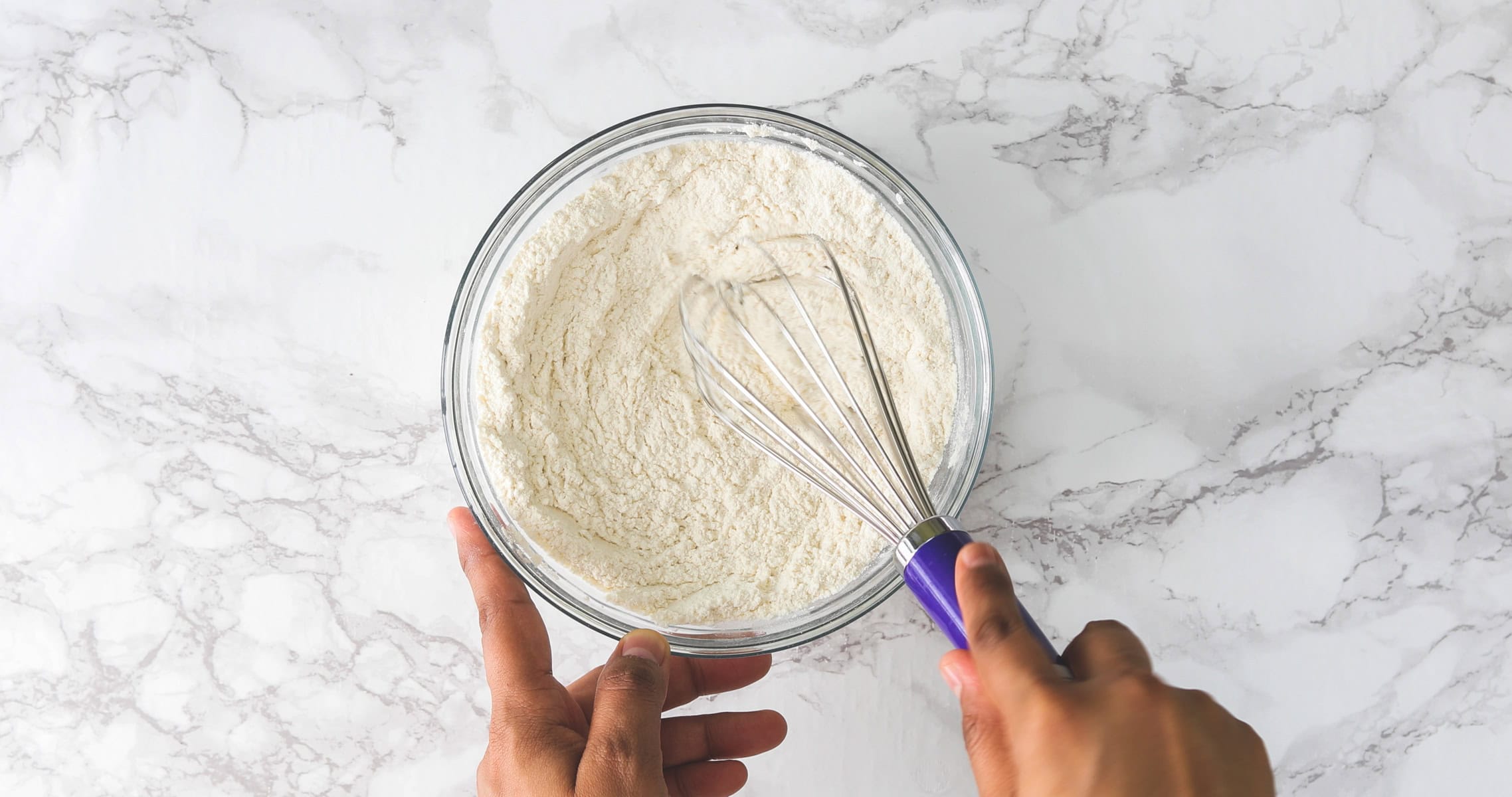
    Whisking dry ingredients in a bowl for eggfree peanut butter cookies.
  • Step 2 — Cream butter and sugars
    In a large bowl, beat the softened butter with both sugars using a hand mixer, stand mixer with a paddle attachment, or a wire whisk and some elbow grease. Beat until the mixture is smooth, pale, and slightly fluffy — about 2 minutes with a mixer. Proper creaming builds structure into the dough.
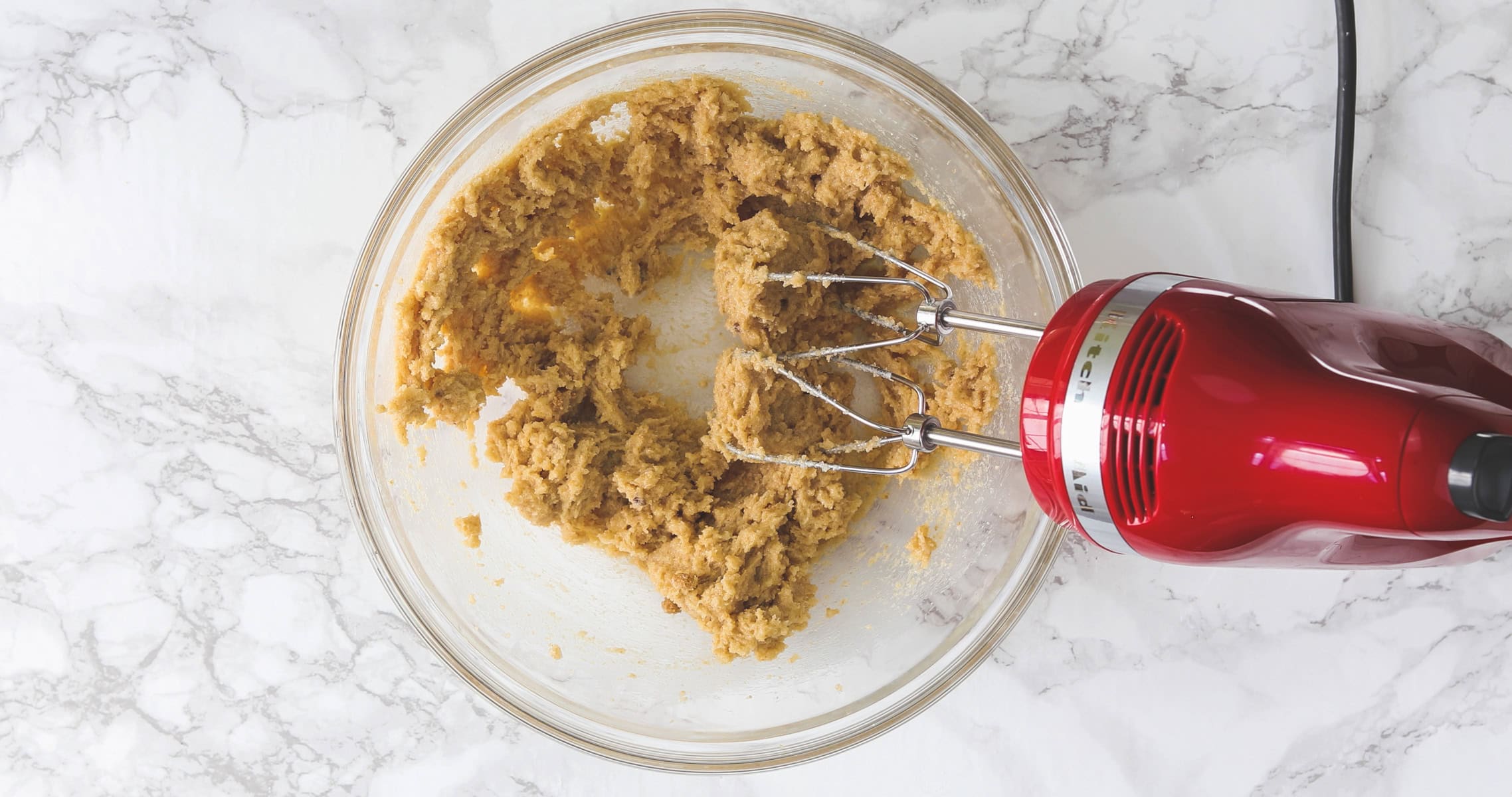
    Creaming butter and sugar using hand mixer.
  • Step 3 — Add peanut butter and milk
    Add the peanut butter and milk to the butter-sugar mixture. Beat again until everything is fully combined and smooth. Scrape down the sides and bottom of the bowl with a spatula to make sure nothing is hiding.
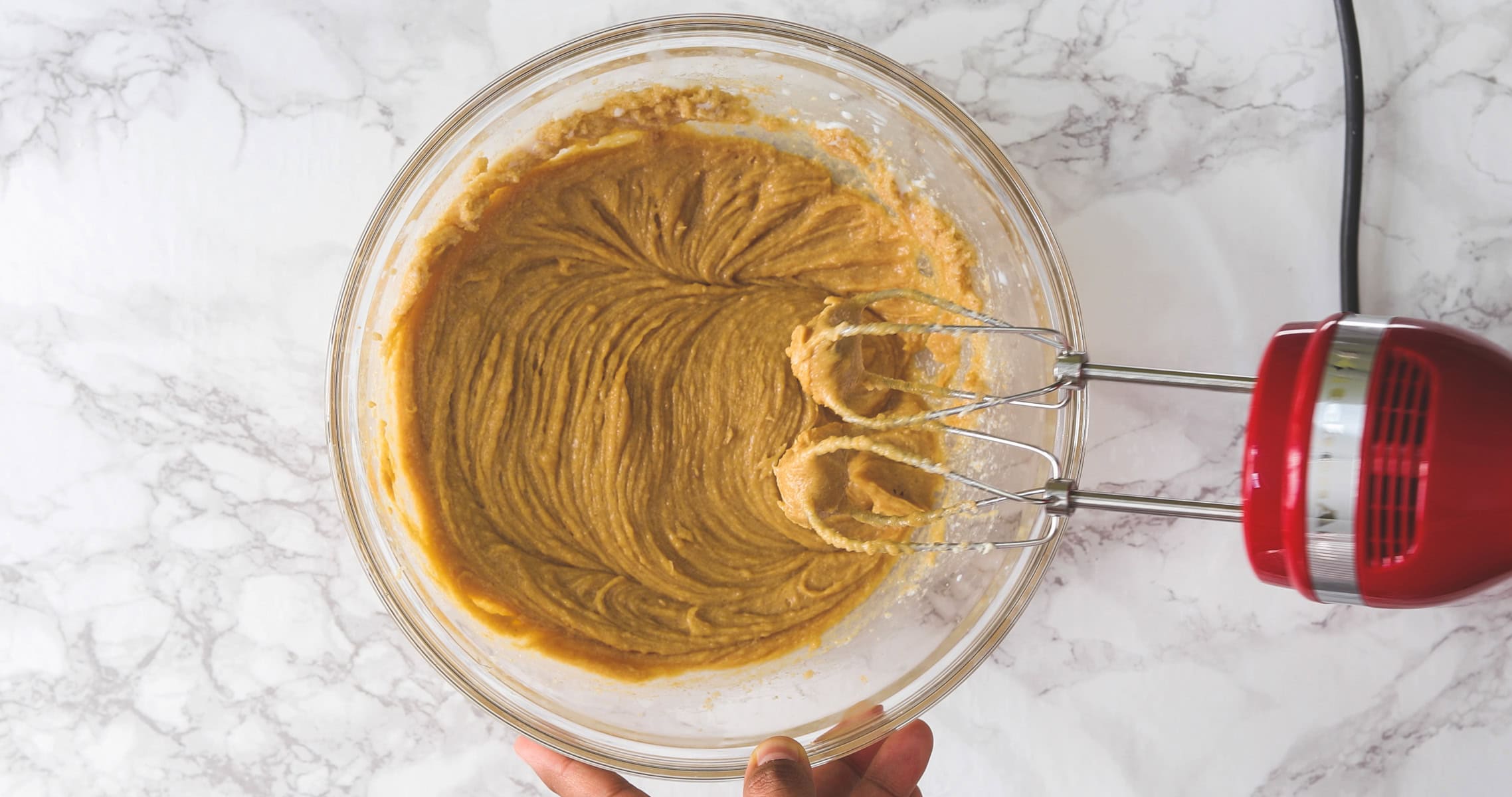
    Mixing milk and peanut butter using hand mixer.
  • Step 4 — Fold in dry ingredients
    Add the flour mixture to the wet ingredients. Stir with a spatula until a loose, slightly sticky dough forms — do not overmix.
    Note: If you're adding chocolate chips or chopped peanuts, fold them in now.
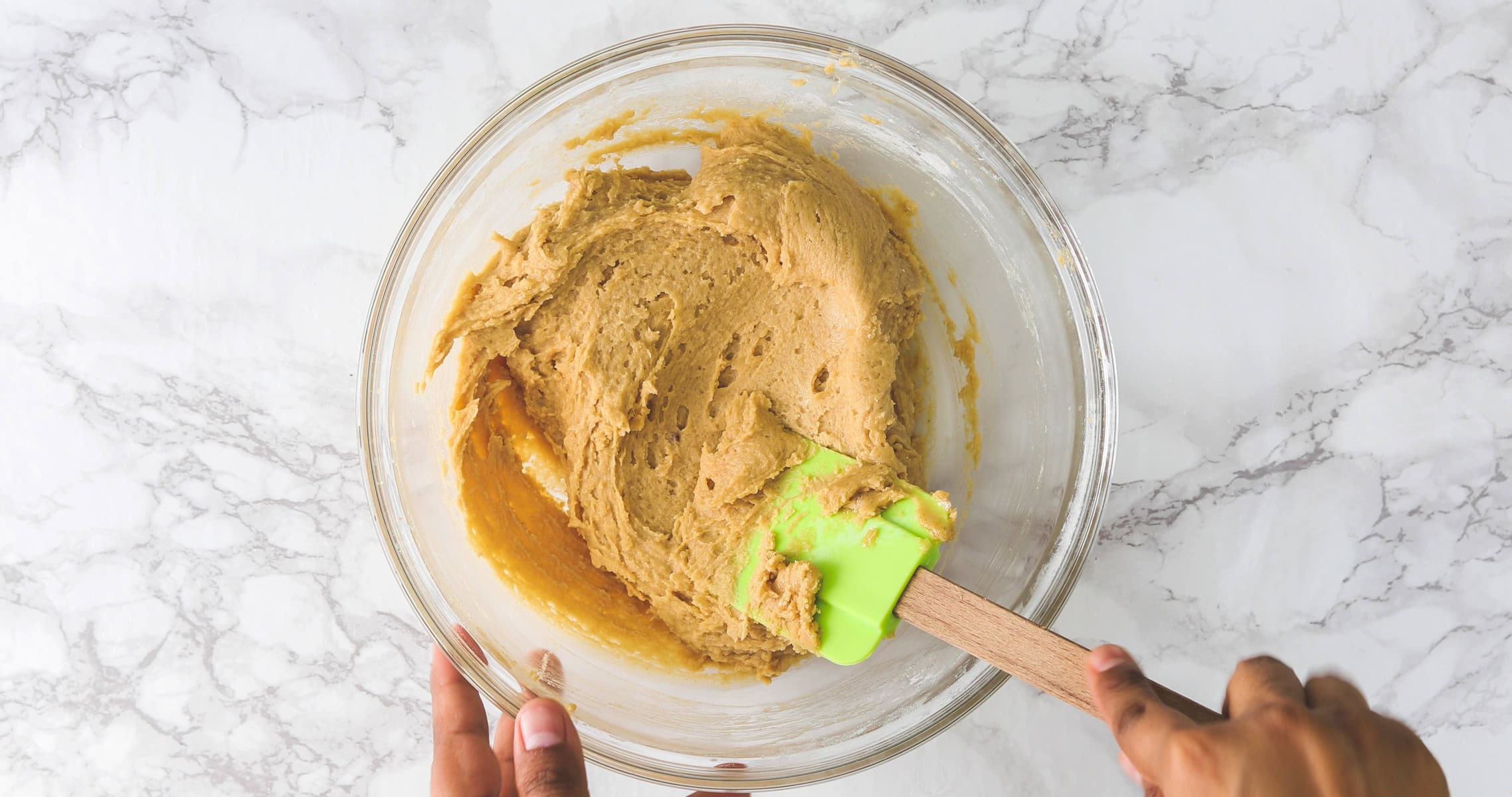
    Folding flour mixture using spatula.
  • Step 5 — Chill the dough (essential)
    Cover the bowl tightly with plastic wrap and refrigerate for at least 30 minutes. The dough should look firm and hold its shape when you press it. If it's still soft or sticky after 30 minutes, chill for another 30 minutes.
    Note: Do not skip this step — unchilled dough spreads too fast and produces flat, greasy cookies.
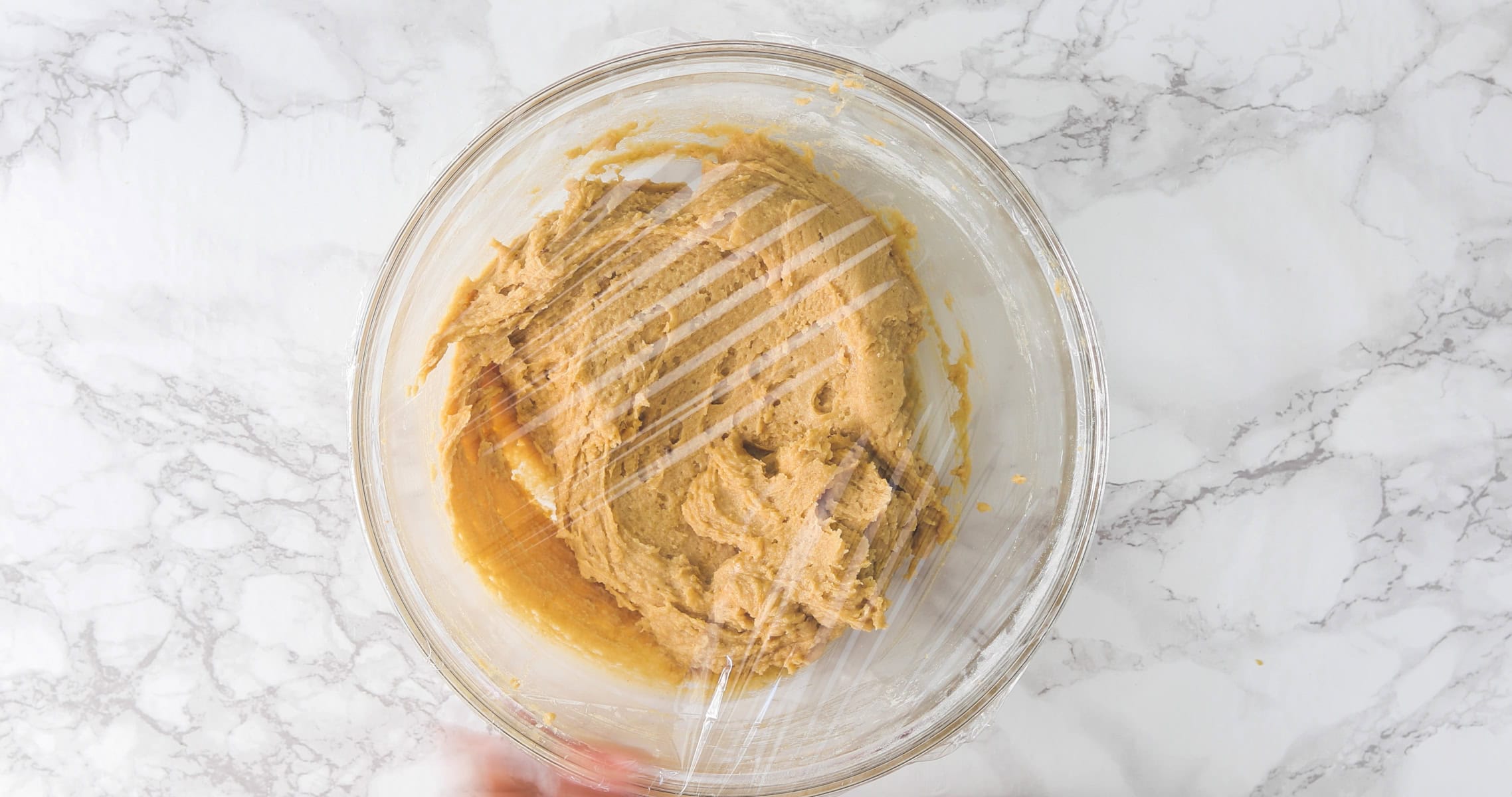
    Peanut butter cookie dough bowl cover with plastic wrap.
  • Step 6 — Preheat and prep
    Preheat your oven to 375°F (190°C) for at least 10 minutes. Line two baking sheets with parchment paper or silicone mats.
  • Step 7 — Roll and arrange
    Using a tablespoon cookie scoop, portion out the chilled dough and roll each piece into a smooth ball.
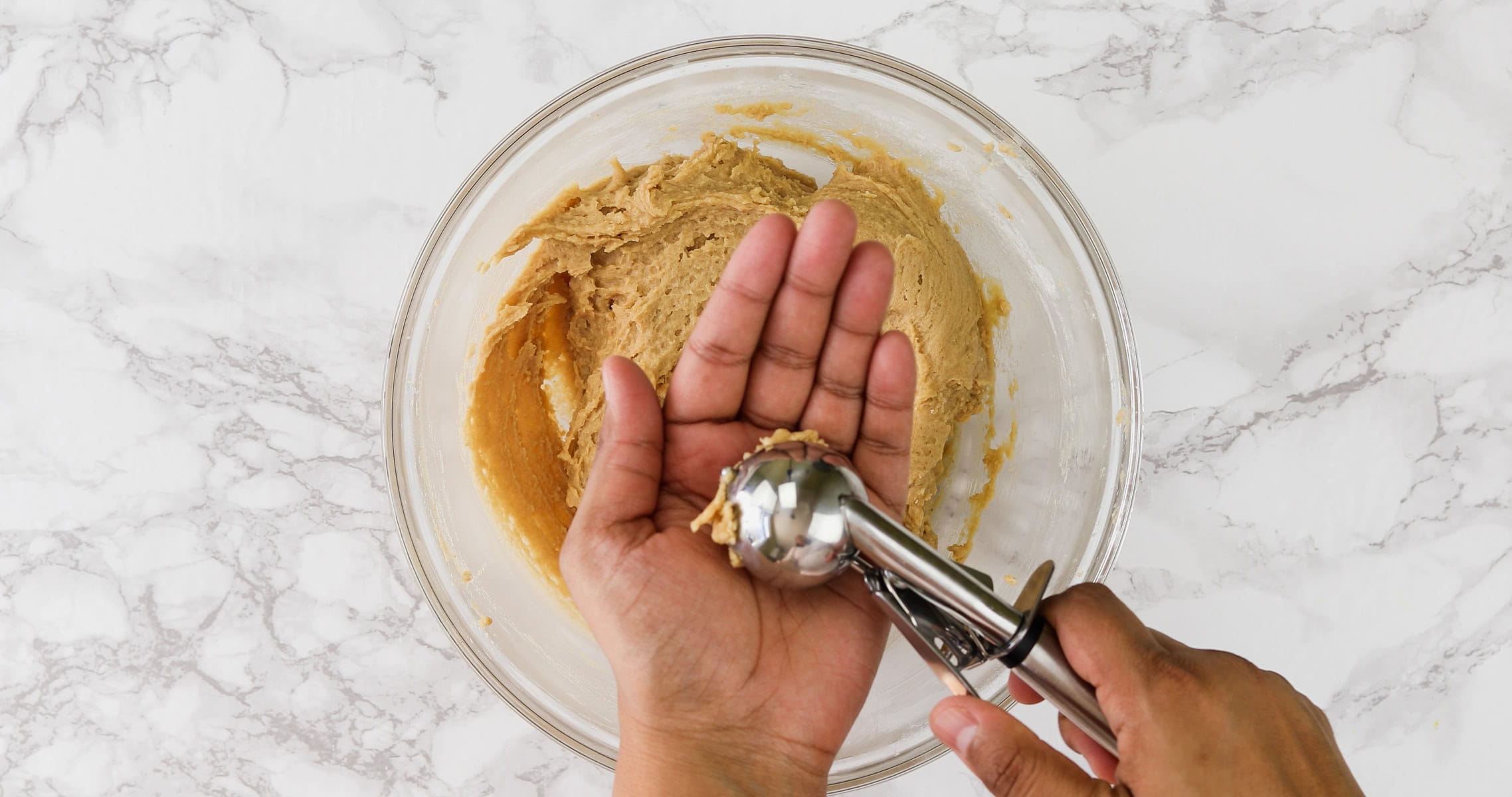
    Scooping a dough to make a ball.
  • Arrange the balls on the prepared trays, leaving at least 2 inches between each one — they spread as they bake.
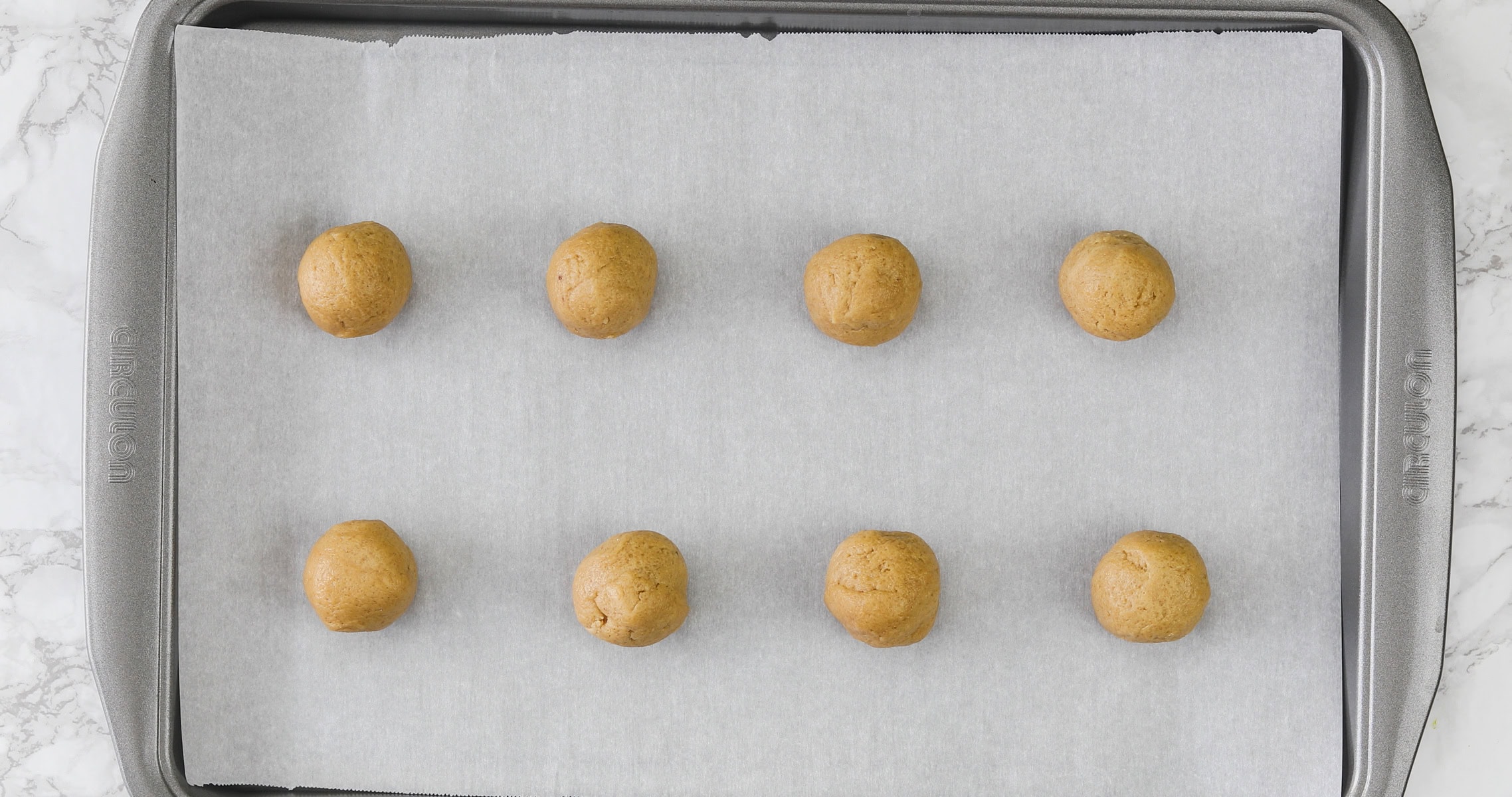
    Eggless peanut butter cookie dough balls arranged on a cookie sheet.
  • Step 8 — Make the criss-cross pattern
    Gently press a fork into the top of each cookie ball to flatten slightly, then rotate 90 degrees and press again to create the classic criss-cross pattern.
    TIP: If the fork sticks to the dough, dip the tines into a small bowl of granulated sugar before each press.
    Important: If the balls feel too soft, refrigerate the tray for 10 minutes before baking.
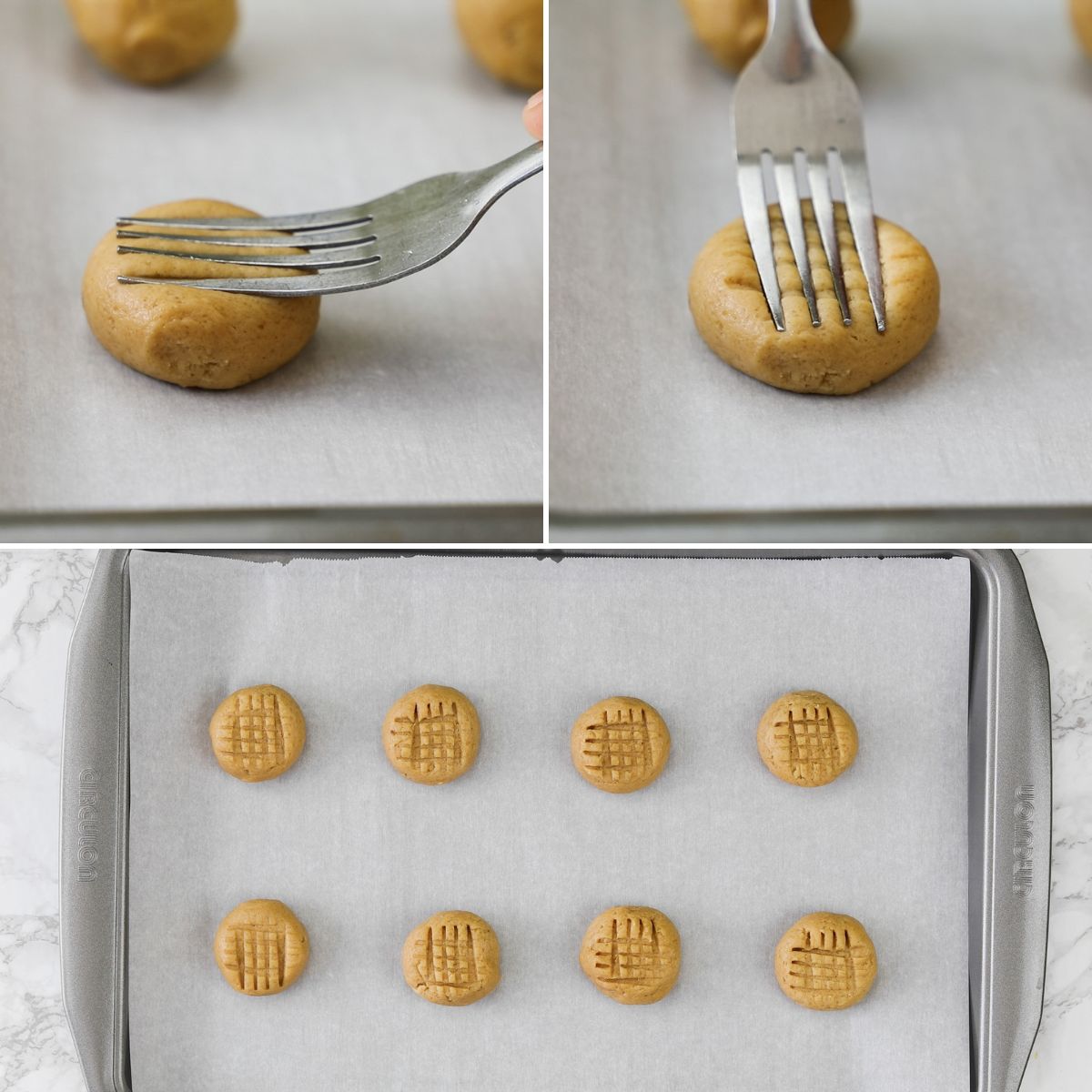
    Making criss cross patter on cookie dough ball using a fork.
  • Step 9 — Bake
    Bake for 13–15 minutes, until the edges are just slightly golden and the centers still look underdone and soft. This is correct — do not overbake. The cookies will continue to firm up as they cool on the hot pan.
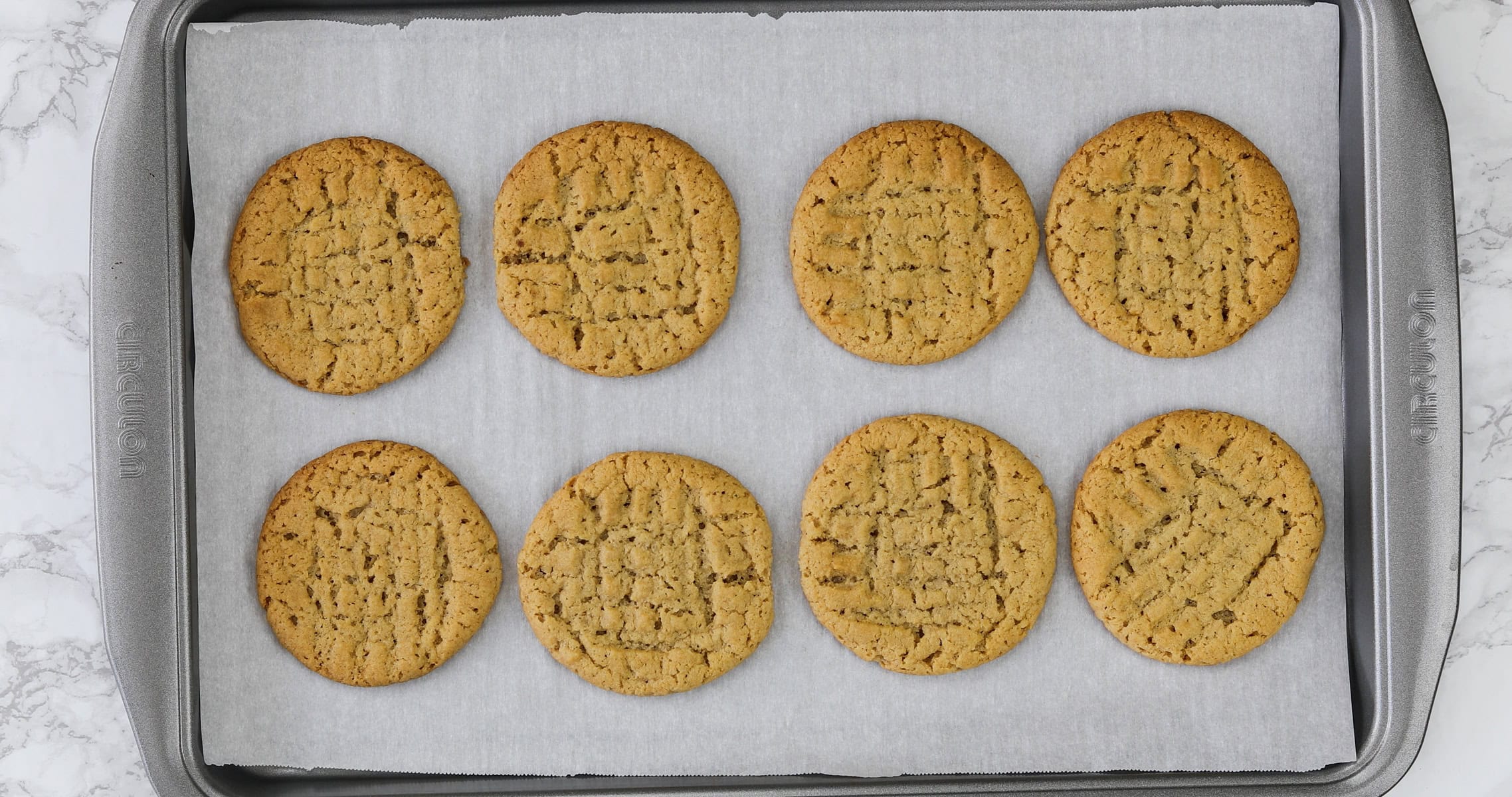
    Baked eggless peanut butter cookies in a pan.
  • Step 10 — Cool completely
    Leave the cookies on the baking sheet for at least 5 minutes before attempting to move them. They are very fragile when hot.
    Transfer to a cooling rack and let them cool completely. Texture fully sets once they reach room temperature.
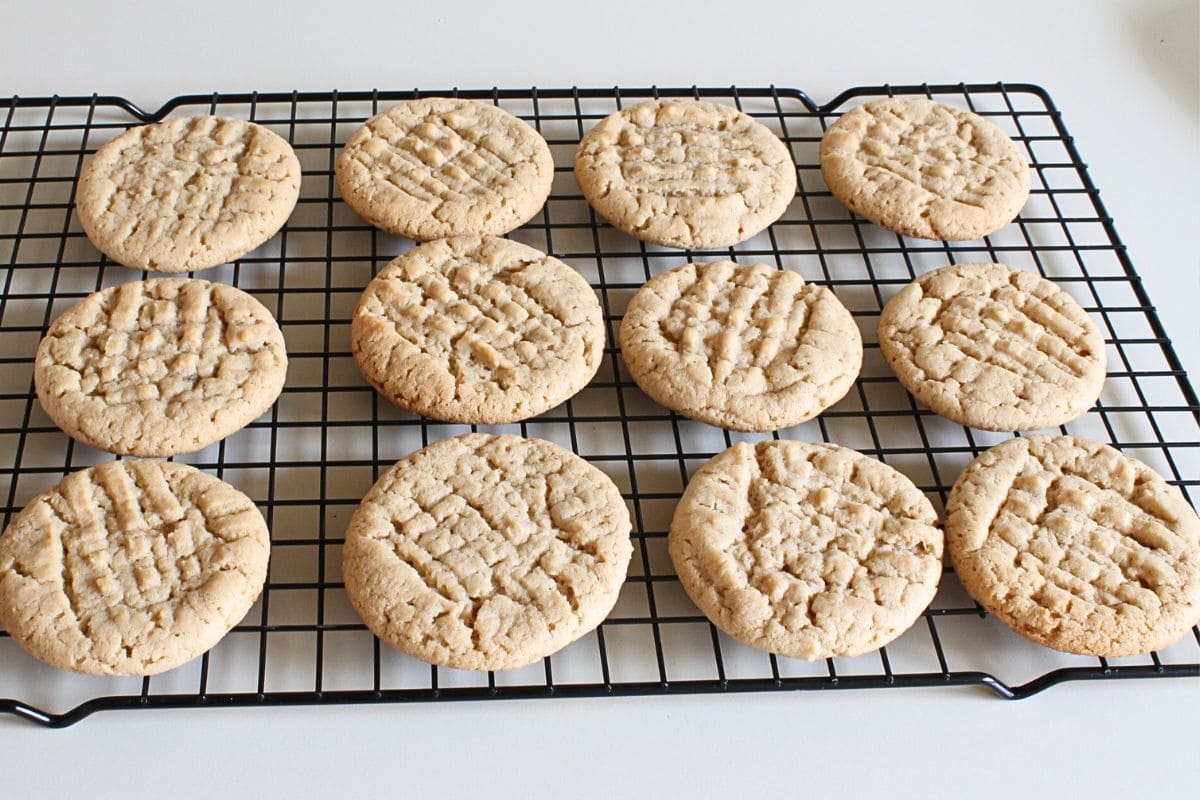
Video

Notes

  • Don’t skip the chill. This is the single most important step for thick, chewy cookies. Warm dough spreads fast and goes flat. Cold dough holds its shape in the oven.
  • Pull them out when they look underdone. The centers should look barely set and almost raw-looking when you take them out. They firm up dramatically as they cool. Overbaked peanut butter cookies are dry and crumbly rather than soft and chewy.
  • Use room-temperature butter, not melted. Melted butter produces flat, greasy cookies. Softened butter creams properly with sugar and creates the structure the dough needs.
  • Dip the fork in sugar, not flour. Sugar gives you a clean release with a slightly sparkly, caramelized surface on top. Flour makes the surface look dusty.
  • Avoid natural peanut butter. The separated oil in natural peanut butter disrupts the fat ratio in the dough and leads to spreading and a greasy texture. Stick to commercial brands for baking.
  • Rotate your trays. If baking two trays at once, rotate them (top to bottom, front to back) at the halfway mark for even browning.

Nutrition

Serving: 2cookies | Calories: 249kcal (12%) | Carbohydrates: 30g (10%) | Protein: 4g (8%) | Fat: 13g (20%) | Saturated Fat: 6g (30%) | Polyunsaturated Fat: 2g | Monounsaturated Fat: 5g | Trans Fat: 1g | Cholesterol: 21mg (7%) | Sodium: 190mg (8%) | Potassium: 105mg (3%) | Fiber: 1g (4%) | Sugar: 18g (20%) | Vitamin A: 245IU (5%) | Calcium: 32mg (3%) | Iron: 1mg (6%)

🔄 Variations

  • Chocolate chip peanut butter cookies: Fold ½ cup semi-sweet chocolate chips into the dough before chilling. The combination of peanut butter and chocolate is never wrong.
  • Chunky peanut butter cookies: Add ⅓ cup roughly chopped roasted peanuts to the dough for extra crunch and texture.
  • Chocolate-drizzled: Once cookies are fully cooled, drizzle with melted dark or white chocolate and let set at room temperature for 30 minutes.
  • Chocolate-dipped: Dip the bottom half of each cooled cookie into melted chocolate, place on parchment, and let set. Inspired by my chocolate dipped shortbread, which has become a reader favorite.
  • Vegan version: Swap the butter for vegan margarine and the milk for unsweetened soy milk using the exact same measurements. Reader Jennifer has confirmed this works perfectly.
  • Extra salty: Sprinkle flaky sea salt on top of each cookie just before baking. The salt enhances the peanut butter flavor and creates a gourmet salty-sweet effect.

🍽️ How to Serve

These cookies are excellent on their own, but here are some ideas:

  • Served warm (10 seconds in the microwave) with a cold glass of milk — the classic pairing
  • Alongside a scoop of vanilla ice cream for an easy dessert
  • Crumbled over vanilla ice cream with hot chocolate sauce
  • Packed in a lunchbox as an after-school snack
  • Gifted in a tin for the holidays — they hold up well and look beautiful stacked

🧊 Storage Instructions

  • At room temperature: Store in an airtight container for up to 2–3 days. Place a piece of bread in the container to keep the cookies soft longer, the cookies absorb moisture from the bread.
  • In the refrigerator: Baked cookies can be stored in the fridge in an airtight container for up to 1 week. Let them come to room temperature before eating, or warm briefly in the microwave.
  • Freezing baked cookies: Freeze in a single layer on a tray first, then transfer to a freezer-safe bag or container. Keeps for up to 3 months. Thaw at room temperature for 30–60 minutes.
  • Freezing cookie dough balls: This is my preferred method. Roll the dough, make the criss-cross pattern, arrange on a tray, and freeze until solid. Transfer to a freezer bag. Bake straight from frozen at 375°F — just add 1–2 minutes to the baking time. No need to thaw. Cookie dough keeps for up to 3 months.
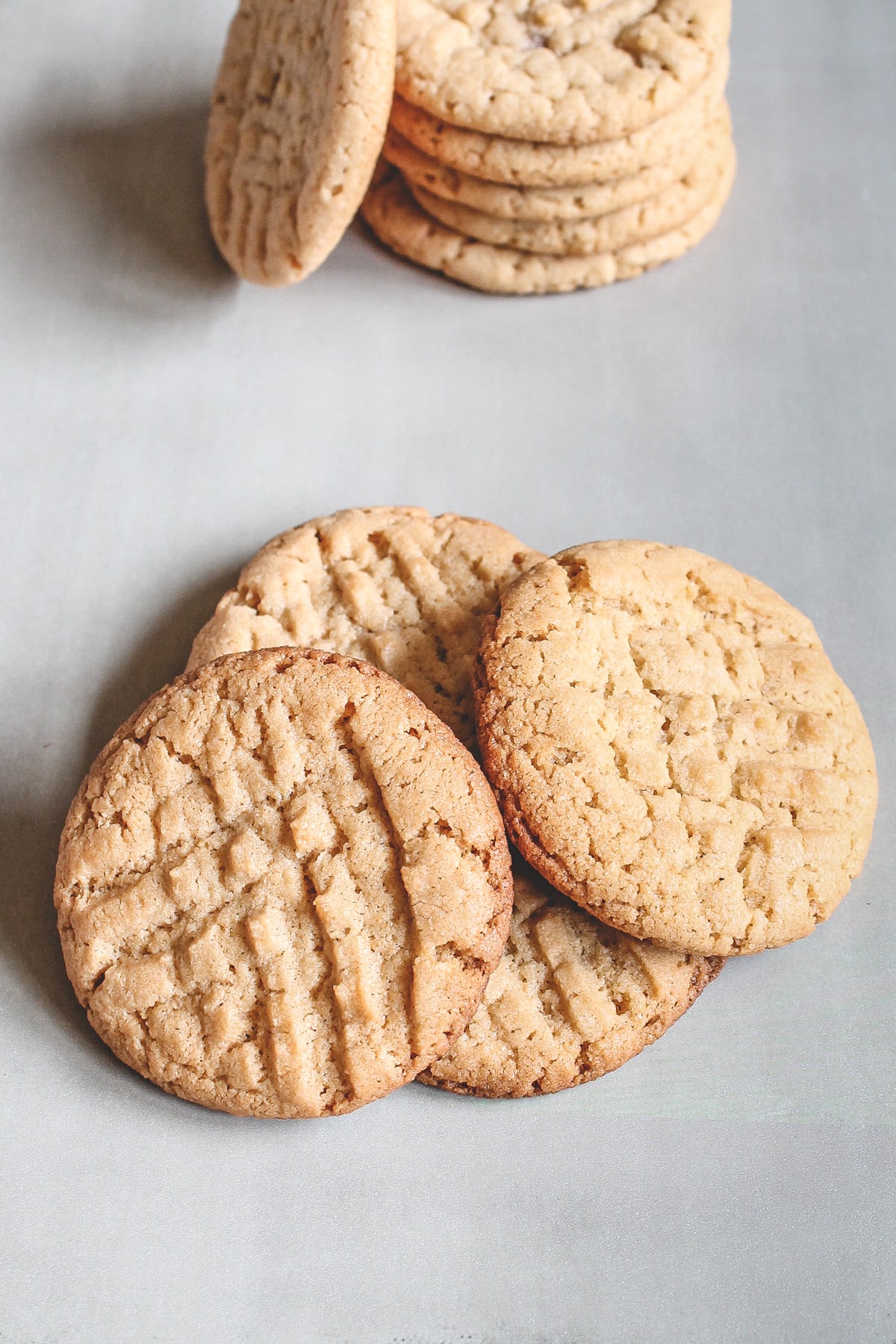
Close up of eggless peanut butter cookies.

FAQs

Yes, peanut butter cookies are one of the easiest cookies to make without eggs. Because peanut butter and butter are already rich in fat, they provide most of the binding and moisture that eggs typically add. A small amount of milk fills in the rest. The result is a cookie that is indistinguishable from the egg-based original in flavor, texture, and appearance.

In this recipe, milk acts as the egg substitute — it adds moisture and just enough binding to hold the dough together. Other options that work in peanut butter cookie dough include: 1 tablespoon of plain yogurt, 1 tablespoon of sour cream, or 1 tablespoon of unsweetened applesauce per egg being replaced. Each gives slightly different results; milk is the cleanest and most neutral option.

 The three most common causes are:

  1. butter that was too soft or melted rather than properly softened
  2. not chilling the dough long enough — it needs at least 30 minutes in the refrigerator
  3. using natural peanut butter with separated oil instead of a commercial brand.

Fix any of these and your cookies should hold their shape.

Yes. Replace the butter with vegan margarine and the milk with unsweetened plant-based milk (soy milk works best). Use the same measurements. The cookies will come out soft, chewy, and fully vegan.

Yes — chilling is not optional for this recipe. The dough is soft and sticky at room temperature. Without chilling, the cookies will spread flat and lose their shape. 30 minutes is the minimum; you can chill for up to 24 hours. Longer chilling actually deepens the flavor.

Usually this means the cookies were overbaked or the flour was over-measured. Pull cookies out when the centers still look underdone — they firm up as they cool. For flour measurement, always spoon flour into the cup and level off; never scoop directly from the bag.

I haven’t personally tested a gluten-free version of this recipe. Readers have had success using a 1:1 gluten-free all-purpose flour blend (like Bob’s Red Mill or King Arthur Measure for Measure) as a direct swap. The texture may be slightly more crumbly.

Look at the edges — they should be just beginning to turn golden. The centers should still look soft, slightly underdone, and almost raw-looking. This is the correct moment to pull them out. They will firm up completely as they cool on the pan. If the centers look set and firm in the oven, they will be overdone once cool.

Yes, absolutely. Crunchy peanut butter adds small peanut pieces throughout the cookie for extra texture. Use the same amount. Just make sure it’s a commercial brand (not natural/separated) regardless of whether it’s creamy or crunchy.

Yes — this recipe scales up easily. Double or triple all ingredients. The dough can be chilled in the same bowl; you’ll just need more baking trays. Freeze any extra cookie dough balls for fresh-baked cookies on demand.


If you make these eggless peanut butter cookies, I would genuinely love to hear how they turned out. Did you add chocolate chips? Try them vegan? Leave them a little underbaked and eat them warm? Drop a comment below with your rating — it helps other readers enormously, and it honestly makes my day. Happy baking! 🥜

Plus, Subscribe to my newsletter and follow along on Pinterest, Instagram, and Facebook for all the latest updates.

🔗 Related Recipes

If you love eggless baking, you’ll want to try these next:

4.62 from 77 votes (46 ratings without comment)

Leave a Reply

Your email address will not be published. Required fields are marked *

Recipe Rating


This site uses Akismet to reduce spam. Learn how your comment data is processed.

120 Comments

  1. This has become my go to peanut butter cookie recipe. Although I veganize the recipe but swapping for vegan margarine and unsweetened soy milk using the same measurements and they come out perfectly.