
12 Modak Recipes

Ganesh Chaturthi 2026 falls on Monday, 14 September 2026.
Modak is Lord Ganesha’s most beloved food — which is why making modak is the most important part of Ganesh Chaturthi preparations. Here I have compiled all 12 modak recipes from this blog, ranging from the traditional classic to quick no-cook varieties, so you can make a different one each day of the ten-day festival. Every recipe has step-by-step photos and detailed instructions.
What is Modak?
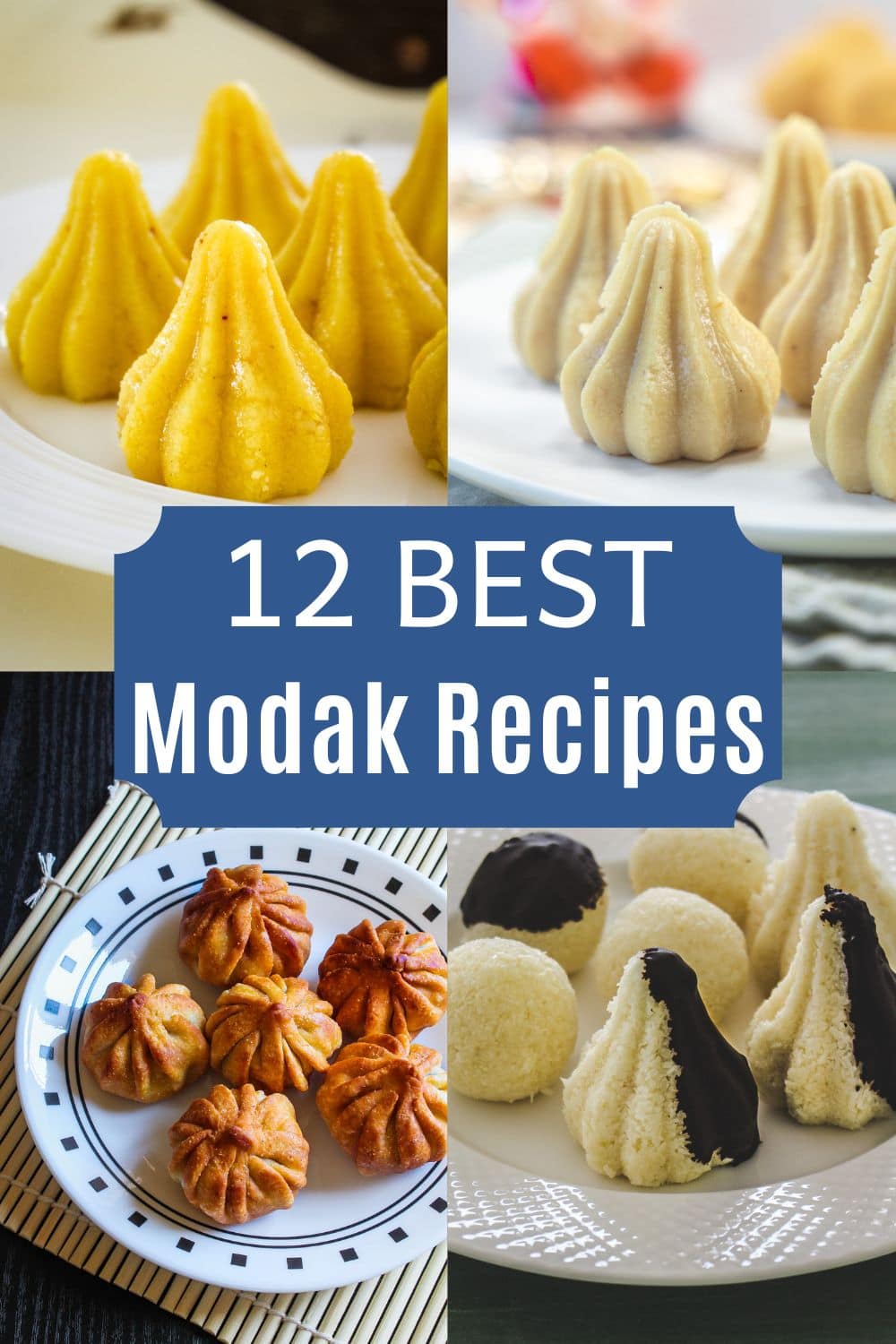
Modak is a flower- or teardrop-shaped sweet dumpling featuring a smooth, soft outer shell stuffed with a sweet coconut-jaggery filling. In Marathi, the classic steamed version is called ukadiche modak — ukadiche meaning “steamed” and ukad referring to the steamed rice flour dough used for the outer covering.
Hindus believe that Ganesha loves modak, which is why he is also called modakapriya — one of the 108 names mentioned in the Ganesha Ashtothram. This is why modak is the mandatory prasad offering during Ganesh Chaturthi puja.
During Ganesh Chaturthi, modak is traditionally offered to Bhagwan Ganesha as naivedyam. While 21 modaks are traditionally offered, you can also offer any odd number — 5, 7, or 11 — depending on your family tradition and preference.
Modak is also known by different names across India: modakam (Tamil), kudumu or kadubu (Telugu/Kannada), and kozhakkattai or kozhukattai (Tamil Nadu).
Traditional vs Fusion Modak — Which Should You Make?
The 12 recipes on this list fall into two broad categories:
- Traditional modak — made with the classic coconut-jaggery filling, either steamed (ukadiche), fried, or shaped differently with the same filling. These are the ones that belong on the prasad thali as a direct offering to Lord Ganesha. If you are making modak for puja, start here.
- Fusion modak — chocolate modak, kaju modak, mango modak, dry fruits modak. These are festival treats — made in the spirit of the occasion and enjoyed as sweets, but using modern or simplified ingredients. Many families make both: traditional modak for the actual puja, and a fusion variety as a festival sweet to share with guests and children.
There is no wrong answer. The tradition is the devotion — not a specific recipe.
How Many Modaks to Offer?
Traditionally, 21 modaks are offered to Lord Ganesha. You can also offer any odd number — 5, 7, or 11 — depending on your family tradition. For a home puja, 11 is the most common number. What matters most is that they are made with care and offered with devotion.
Do I Need a Modak Mould?
Shaping modak by hand involves pleating and stuffing by hand, which can overwhelm beginners and requires practice to get a neat shape. Using a mould is the easiest method and ideal when making a large number or working in a rush.
For most of the recipes on this list — especially the fusion and no-cook varieties — a mould is the recommended approach. Many shops begin to sell modak moulds a few weeks before Ganesh Chaturthi. They are also readily available online. Both aluminium and plastic moulds are easy to use.
In the US, check your local Indian grocery store during festival season — they are usually stocked near the entrance or at the counter. The silicone modak mould is the most forgiving for beginners.
If you want to learn the hand-shaping method, the ukadiche modak recipe and fried modak recipe on this blog walks through both methods with detailed photos.
12 Modak Recipes (With Difficulty Level)
I’ve rated each recipe by difficulty so you can choose the right one for your skill level and available time.
The classic. The non-negotiable. Always make this first.
This is Lord Ganesha’s most beloved form of modak and the one that holds the place of honor on every Chaturthi prasad thali.
This is the most skill-intensive recipe on this list — the rice flour dough requires precise water and heat technique, and the pleating takes practice. But nothing matches it in flavor and authenticity. The recipe includes detailed instructions for both the hand method and the mould method, so even first-timers can follow along.
Crispy, flaky, and deeply satisfying.
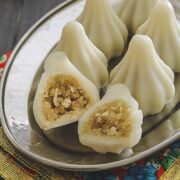
The same classic coconut-jaggery filling as ukadiche modak, but inside a deep-fried, flaky outer crust made from all-purpose flour. The pleating technique for fried modak is considerably easier than for steamed modak — the pastry-style dough is more forgiving and easier to shape. If you love the flavor of traditional modak but want to skip the steaming technique, this is your recipe.
No steaming. Easy shaping. Classic filling.
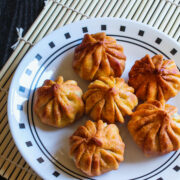
Ready in about 30 minutes from start to finish. A great choice if you want to offer a traditional-tasting modak without the steaming technique.
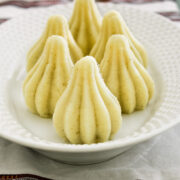
The easiest fusion modak. Under 30 minutes. Kids’ favourite.
Uses a modak mould so there is no shaping skill involved. Ready in under 30 minutes including setting time. This is the recipe I’d recommend for anyone making modak for the first time who wants something guaranteed to work.
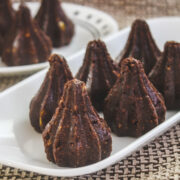
4 ingredients. 20 minutes. Showstopper on the thali.
The look of modak, the simplicity of peda. Made from mawa (khoya), sugar, saffron, and cardamom — cooked down to a soft dough, shaped using a modak mould, and finished with a saffron strand on top. Always the most visually striking item on the prasad thali. This is also the quickest cooked modak recipe on this list.
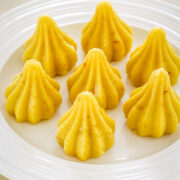
- 🟢 Coconut Modak (Chocolate Covered)
2 ingredients. 10 minutes. Completely no-cook.
Fresh coconut and condensed milk — that’s it for the main component. Mixed together, shaped using a modak mould, and optionally dipped in melted chocolate. No heat required. This is the recipe to make with children — the whole process is safe and simple from start to finish, and the chocolate-dipped version looks spectacular.
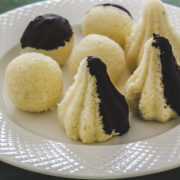
Tastes like kaju katli, shaped as modak. 4 ingredients.
Made from cashew powder, sugar, water, and cardamom — essentially the same preparation as kaju katli (the classic Diwali sweet) but shaped into modak using a mould. Melt-in-the-mouth, pure, and beautiful. If you are comfortable making kaju katli, this is completely straightforward. If not, follow the recipe closely for the sugar syrup consistency.
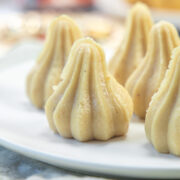
No-cook. 10 minutes. Just a food processor.
Dates, cashews, raisins, almonds, and a handful of other dry fruits blended in a food processor and shaped using a modak mould. No sugar, no cooking — the dates provide all the sweetness. Naturally high in energy and fiber. This is the most nutritious modak on this list and the fastest to make. Great for offering on the days during the 10-day festival when you want something quick.
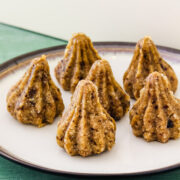
- 🟡 Stuffed Mawa Modak (Khoya Modak)
The most indulgent. Rich, white, and very Maharashtrian.
The outer layer is made from just khoya (mawa) and sugar — cooked together until they come together as a soft, smooth dough. Filled with a dates and nuts mixture. These are called khavyache modak in Maharashtra and are considered one of the more special, celebratory varieties. The outer layer is white and beautiful. Slightly more involved than the no-cook varieties but deeply worth the effort.
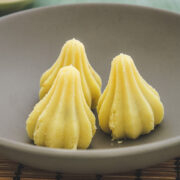
- 🟢 Malai Modak (Paneer Modak)
2 ingredients. 15 minutes. Incredibly soft.
Made from fresh paneer (or ricotta) and condensed milk — mixed together, cooked briefly, and shaped using a modak mould. The texture is smooth, soft, and slightly creamy. No pleating, no steaming, no special skill. This is a great recipe for anyone who wants to make something from scratch but has limited baking or cooking experience.
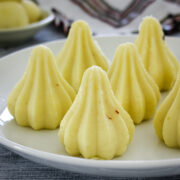
- 🟡 Til Modak (Sesame Seeds Modak)
A lesser-known gem. Nutty, jaggery-sweet, and deeply traditional.
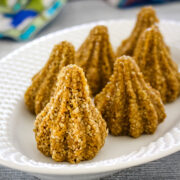
Made from roasted sesame seeds (til), jaggery, fresh coconut, and ghee — 4 ingredients. The sesame seeds and jaggery are cooked together until they bind, then shaped using a mould. The texture is firm, slightly chewy, and dense with nutty sesame flavor. Very different from any other modak on this list — and completely traditional in flavor profile. Worth making at least once.
Seasonal, fragrant, and beautiful.
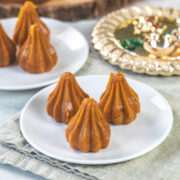
A mawa modak variation made with ripe mango pulp — the khoya is cooked with fresh or canned mango puree and shaped into modak. Best made during Alphonso or Kesar mango season when the flavor is at its peak. The natural color from the mango is gorgeous — a pale golden orange that looks stunning on the thali.
Which Modak to Make for Each Day of the Festival
Ganesh Chaturthi is a ten-day festival — and many families make a different modak variety as a daily offering. Here is a simple plan:
|
Day |
Modak |
|---|---|
|
Day 1 — Chaturthi (main day) |
Ukadiche Modak (steamed — traditional, non-negotiable) |
|
Day 2 |
Kesar Modak Peda (quick and festive) |
|
Day 3 |
Fried Modak |
|
Day 4 |
Rava Modak |
|
Day 5 |
Coconut Modak |
|
Day 6 |
Dry Fruits Modak |
|
Day 7 |
Chocolate Modak |
|
Day 8 |
Malai Modak |
|
Day 9 |
Kaju Modak |
|
Day 10 |
Stuffed Mawa Modak |
|
Day 11 — Visarjan |
Til Modak |
This is just a suggestion — choose based on your time, skill level, and what ingredients you have on hand.
Ganpati Bappa Morya! Wishing you a joyful and blessed Ganesh Chaturthi 2026! 🙏
This list is updated annually before the festival season. Last updated: August 2026.

Hi Kanan,
Saw ur 10different modak recipes. I will surely try.
I didn’t know we can make so many different modak so far.. from where u bought the modak mould ? It’s really nice.. Do u have YouTube channel?
This modak mould I bought it from India.
During this festive season, you will find them in Indian grocery stores here in the USA. You’ll have to ask them since those are not on display.
yes I have youtue channel, Here is the link. recently I started adding short videos.
God gracious ! Thank you for reminding me of Ganesh Chaturti, dear 🙂 🙂 🙂