Veg Hakka Noodles (Indo-Chinese Style)

The BEST veg hakka noodles you’ll make at home — crispy-tender vegetables, perfectly cooked noodles with separate strands, and that signature Indo-Chinese flavor that hits every single time. Ready in just 30 minutes, all in one wok.

Flavor: Savory, garlicky, mildly spicy with a light tang
Texture: Noodles glossy and separate, vegetables crisp-tender — never soggy
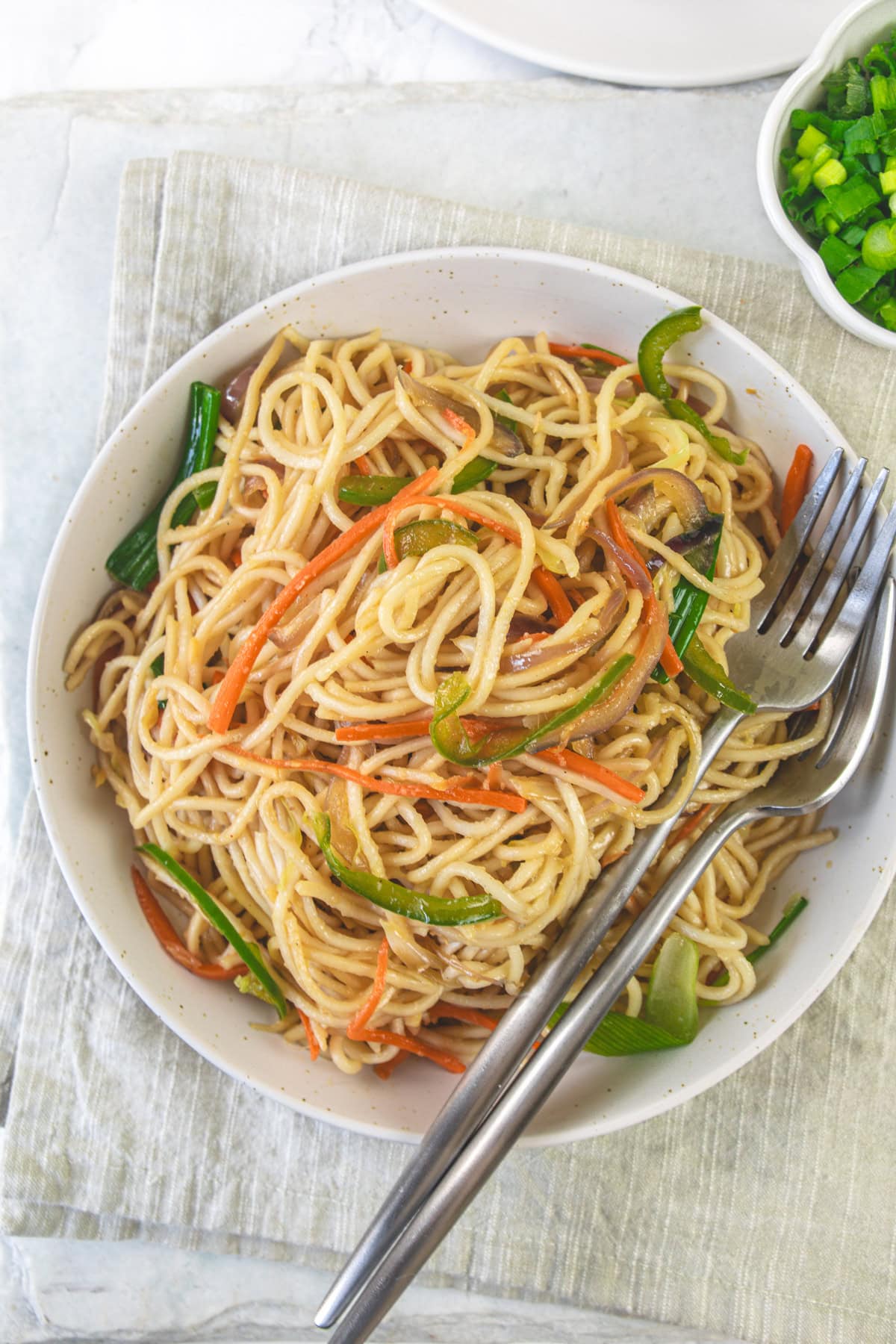
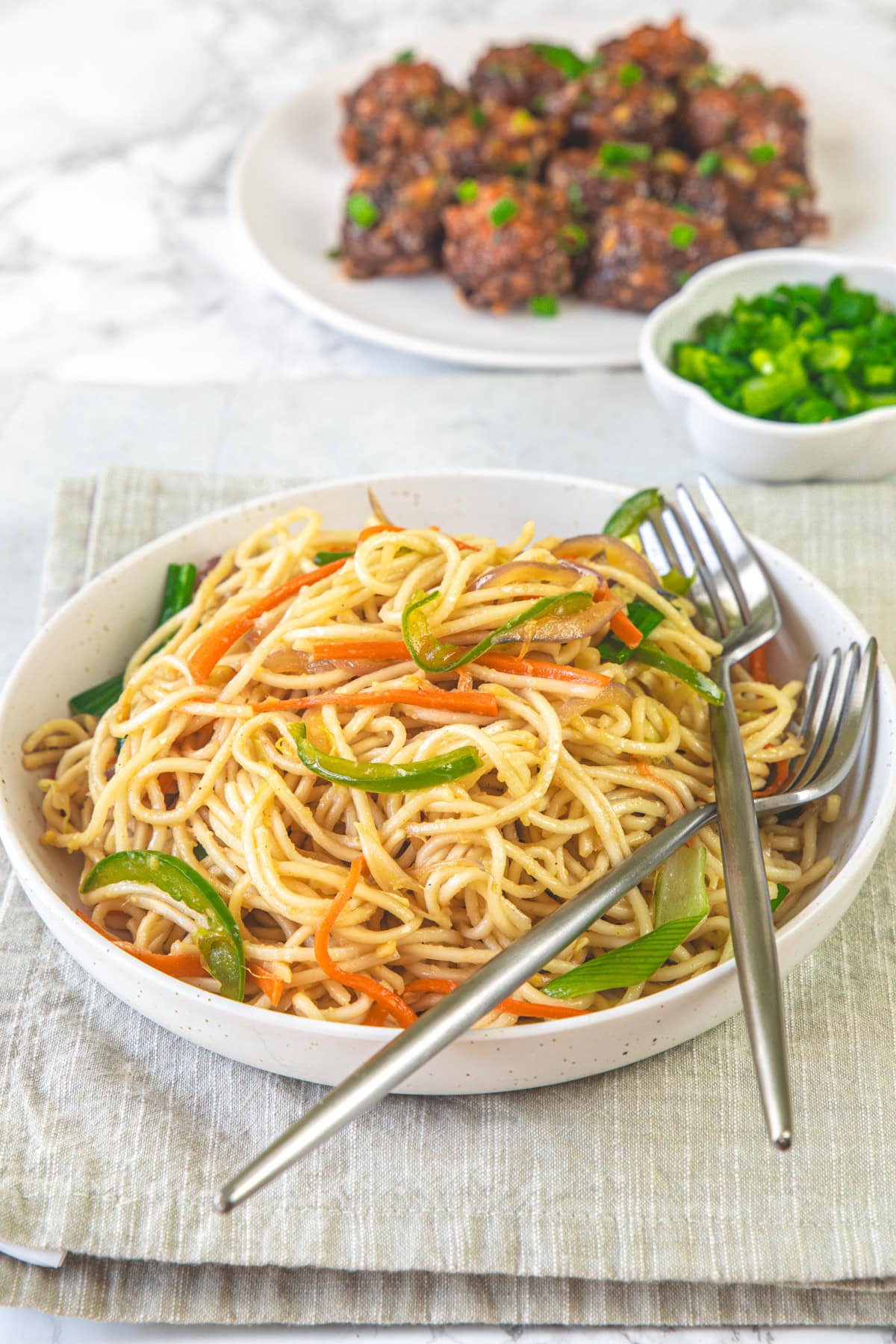
A bowl of veg hakka noodles with two forks on a napkin.

What Are Hakka Noodles?

Hakka noodles are a popular Indo-Chinese dish of stir-fried wheat noodles tossed with vegetables, garlic, ginger, soy sauce, and chili sauce in a hot wok. They are one of the most-ordered dishes at Indian-Chinese restaurants across India — sold everywhere from street carts to hotel restaurants.

The History: The dish gets its name from the Hakka Chinese community that settled in Kolkata, West Bengal in the 18th and 19th centuries. These immigrants adapted their traditional cooking techniques to locally available vegetables and Indian taste preferences, creating a completely unique cuisine — today known as Indo-Chinese. Hakka noodles are the crown jewel of that cuisine.

What is Indo-Chinese cuisine? Indo-Chinese (also called Desi Chinese or Indian Chinese) is a fusion food style that uses Chinese cooking methods — high-heat stir-frying, wok cooking, soy sauce — but with Indian vegetables, Indian spices, and Indian flavor preferences. The result is bolder, spicier, and more pungent than authentic Chinese food. Dishes like hakka noodles, gobi manchurian, chili paneer, and veg fried rice all belong to this category.

About This Veg Hakka Noodles Recipe

Hakka noodles from my childhood was very specifically a “going out” treat — the ones from the roadside Chinese stalls in India, where the vendor would toss everything in a screaming-hot wok over open flame and hand it over in a small paper box. That smoky, garlicky, slightly oily flavor is incredibly hard to forget.

I’ve made this recipe countless times over the years and recently revised it after testing it repeatedly to get that restaurant quality at home. The key is doing two things right that most home recipes miss: boiling the noodles correctly (al dente, rinsed cold, tossed in oil) and cooking on genuinely high heat so the vegetables stay crisp instead of going soggy. Follow these two rules and your hakka noodles will taste like the real thing.

This veg hakka noodles recipe is:

  • Ready in 30 minutes including all prep
  • Made with just 5–6 vegetables and a handful of pantry sauces
  • Naturally vegan
  • Completely customizable with protein, different vegetables, and heat levels
  • A perfect weeknight dinner that the whole family loves
  • Easy to scale up for more servings

⭐ Why You’ll Love This Recipe

  • Restaurant-style flavor at home — no MSG needed
  • The noodles come out separate and glossy, not clumped or mushy
  • Crispy-tender vegetables in every bite — not overcooked
  • Quick, satisfying, and uses ingredients already in your pantry
  • Works with Ching’s hakka noodles, any thin wheat noodle, or even spaghetti
  • Easily made with paneer, tofu, or egg for extra protein

Ingredient Notes

Complete list of ingredients and amounts is written in the recipe card below.
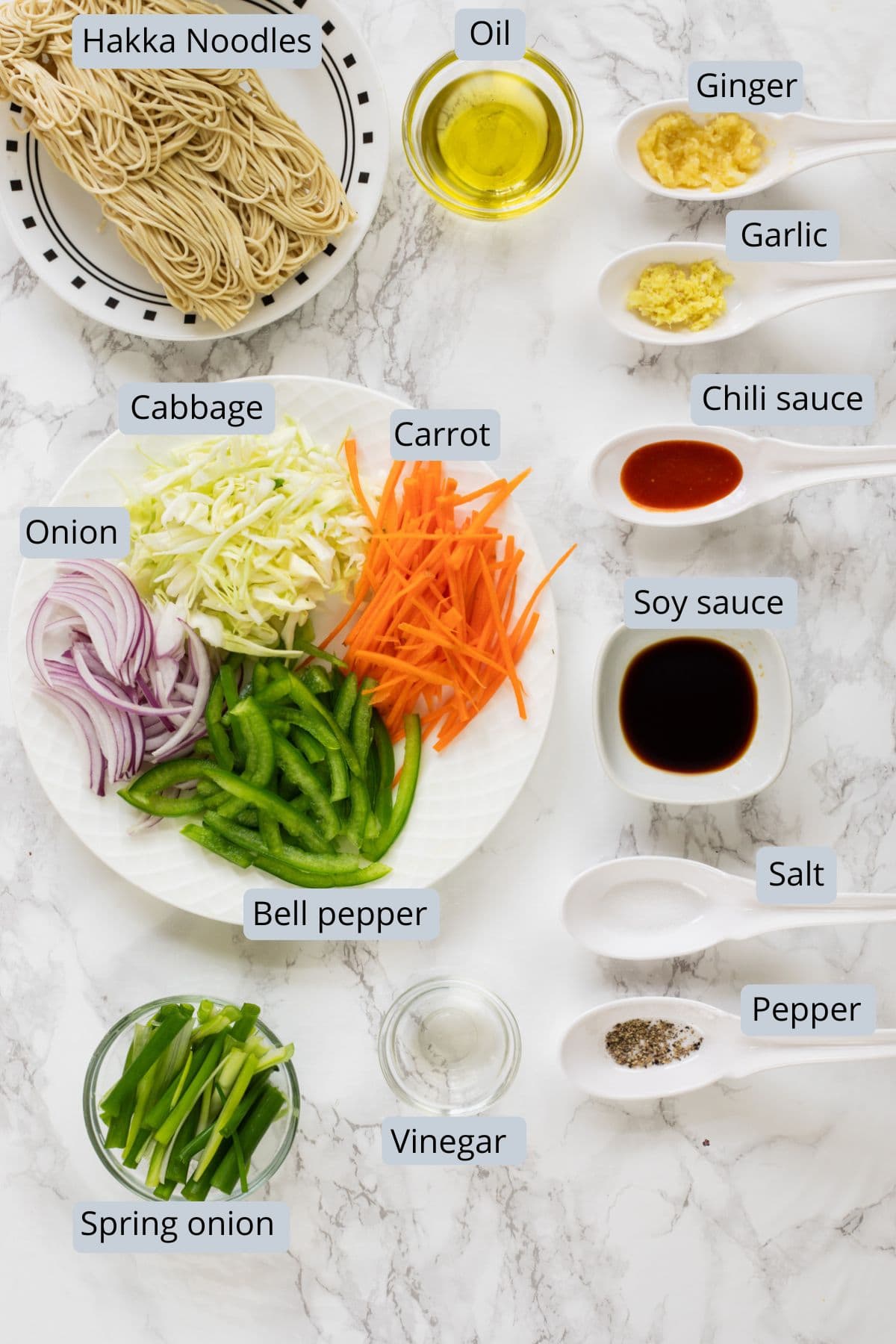
Veg hakka noodles ingredients in plate and spoons with labels.
  • Ching’s Hakka Noodles: I use Ching’s brand, which is the most widely available and most authentic choice for this recipe — you’ll find it at any Indian grocery store. Use the vegetarian version (the red packet).
  • If you can’t find Ching’s or any hakka noodles, you can substitute: thin wheat noodles, lo mein noodles, ramen noodles (discard the seasoning packet), or even regular spaghetti in a pinch. The texture of spaghetti is slightly different but works surprisingly well.
  • Oil (3 tablespoons): Do not reduce the oil. I know 3 tablespoons sounds like a lot, but this is a stir-fry — the oil is what gives hakka noodles their characteristic glossy, slightly oily finish. Street-style hakka noodles are intentionally a little oily. Reducing the oil gives you dry, sticky noodles.
  • Use a neutral oil with a high smoke point — sunflower, canola, or refined groundnut oil all work.
  • You can add ½ teaspoon of toasted sesame oil at the very end for extra aroma and a restaurant-like depth of flavor.
  • Garlic and ginger (minced): Always use fresh — never jarred paste. The difference in flavor is significant, especially in a dish as simple as this where garlic and ginger are the main aromatics.
  • Mince them fine so they coat the vegetables evenly rather than sitting in chunks. Or roughly crush them in a wet jar of the spice grinder.
  • Vegetables — the classic four: The traditional vegetables in hakka noodles are onion, cabbage, capsicum (green bell pepper), and carrot. These are non-negotiable for the authentic flavor and texture.
  • The size rule: Cut all vegetables uniformly thin and long — roughly the same size as the noodle strands. This isn’t just for aesthetics. Uniform, thin-cut vegetables cook at the same speed, staying crisp-tender together.
  • Soy sauce: Use light soy sauce, not dark. Dark soy sauce turns the noodles very dark brown and has a much stronger flavor that can overpower everything else. I use regular soy sauce available at any grocery store — no need for anything specialty.
  • Chili sauce or hot sauce: Ching’s green chili sauce or red chili sauce are my go-to choices (again, easily available at Indian grocery stores). You can also use sriracha, sambal, or any hot sauce you have.
  • Vinegar: Added at the very end of cooking, just before serving. Vinegar is what gives hakka noodles their characteristic mild tang — it brightens all the flavors.
  • White vinegar works fine; rice vinegar gives a slightly milder, more nuanced result.
  • Spring onion greens: Added at the very end with the vinegar — they wilt just slightly from the heat of the noodles but stay mostly fresh.
  • They add color, freshness, and a mild onion flavor that finishes the dish. Don’t skip these; they are an important part of the final flavor.

Pro Tip: Do all your prep — boil noodles, chop all vegetables, measure all sauces — before you turn on the heat. Once the wok is hot, everything moves in 5 minutes. If you are still chopping or measuring while stir-frying, the vegetables will overcook and the noodles will burn. Mise en place (everything ready before cooking) is the most important rule of wok cooking.

Tried this recipe? A star rating ⭐️ and a quick comment below help others (and me!) know how it went.

Veg Hakka Noodles Recipe (Indo-Chinese Style)
5 from 1 vote
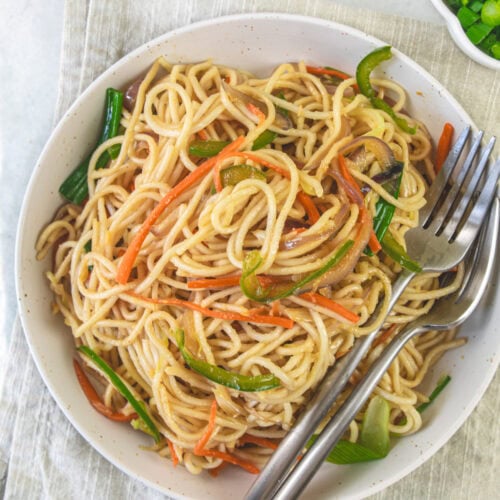
A bowl of veg hakka noodles with two forks on a napkin.
The BEST veg hakka noodles you'll make at home — crispy-tender vegetables, perfectly cooked noodles with separate strands, and that signature Indo-Chinese flavor that hits every single time. Ready in just 30 minutes, all in one wok.
Kanan
Prep Time 15 minutes
Cook Time 15 minutes
Total Time 30 minutes
Serving Size 3

US measuring cups are used (1 cup = 240 ml)

Ingredients

  • 150 grams Chings Hakka noodles
  • 3 tablespoons Oil
  • 1 tablespoons Garlic, minced
  • 2 teaspoon Ginger, minced
  • ½ cup Red onion, sliced
  • ½ cup Cabbage, shredded
  • ½ cup Green bell pepper (Capsicum), thinly sliced
  • ½ cup Carrot, julienned
  • 1 tablespoons Soy sauce
  • 1 teaspoon Chili sauce, or hot sauce
  • Salt, to taste
  • ½ teaspoon Black pepper powder
  • cup Spring onion greens, cut into ½ inch long pieces
  • ½ teaspoon White distilled vinegar

Instructions

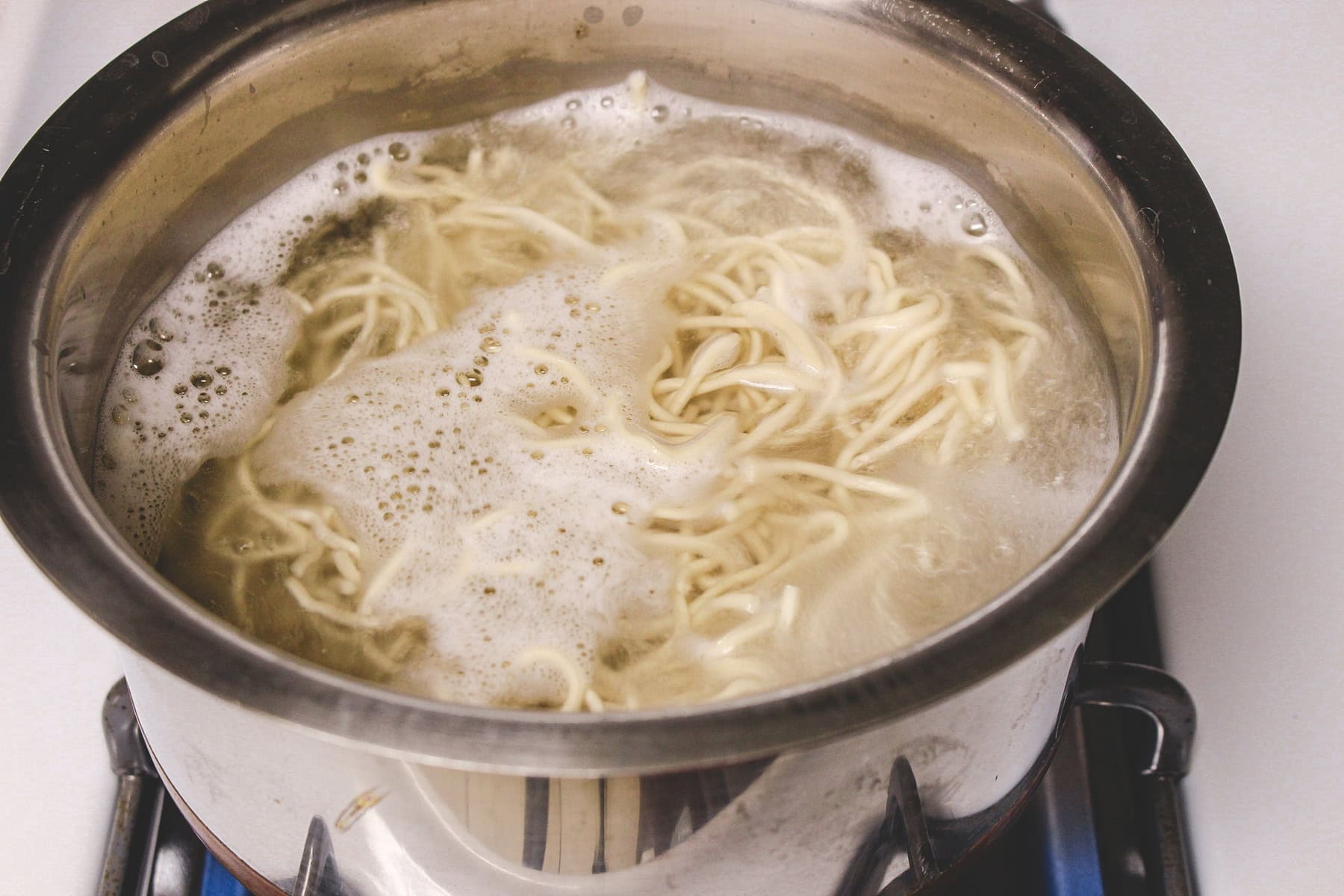
  • Boil the Noodles (The Most Important Step): Bring a large pot of water to a full rolling boil. Add a pinch of salt and a drop of oil.
    Add the Ching's hakka noodles and cook for 1 minute less than the package instructions — this is called al dente. The noodles will continue cooking for a few seconds after you drain them, so pulling them out early means they'll be perfectly cooked by the time they go into the wok.
    Noodles boiling on a pan.
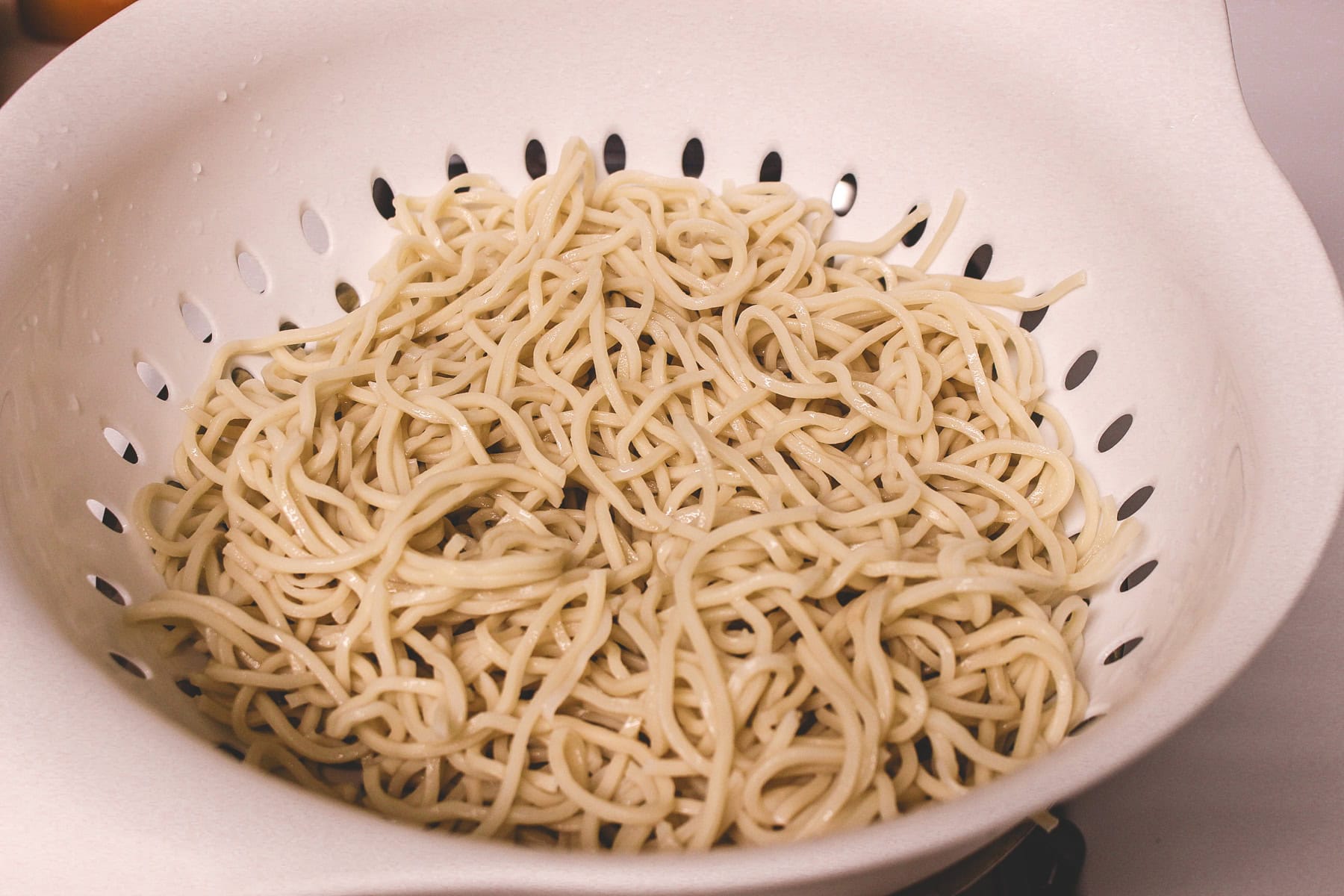
  • Immediately drain through a colander and run under cold running water for at least 30 seconds, tossing with your hands.
    This does two things: stops the cooking process completely and washes off excess surface starch (which is what makes noodles clump together). Drain well.
    Boiled noodles in a colander.
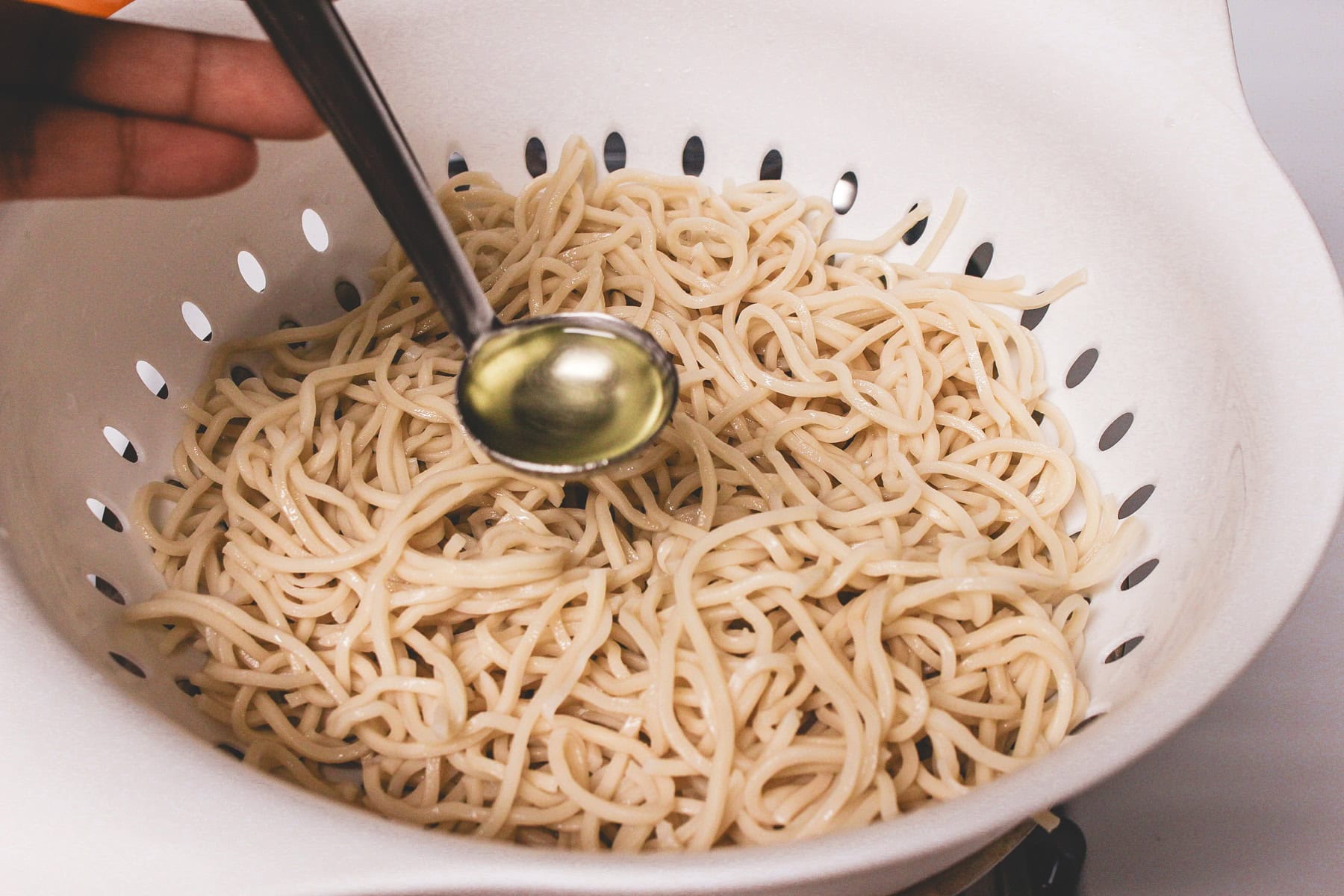
  • Drizzle 1 teaspoon of oil over the drained noodles.
    Adding oil in a boiled noodles.
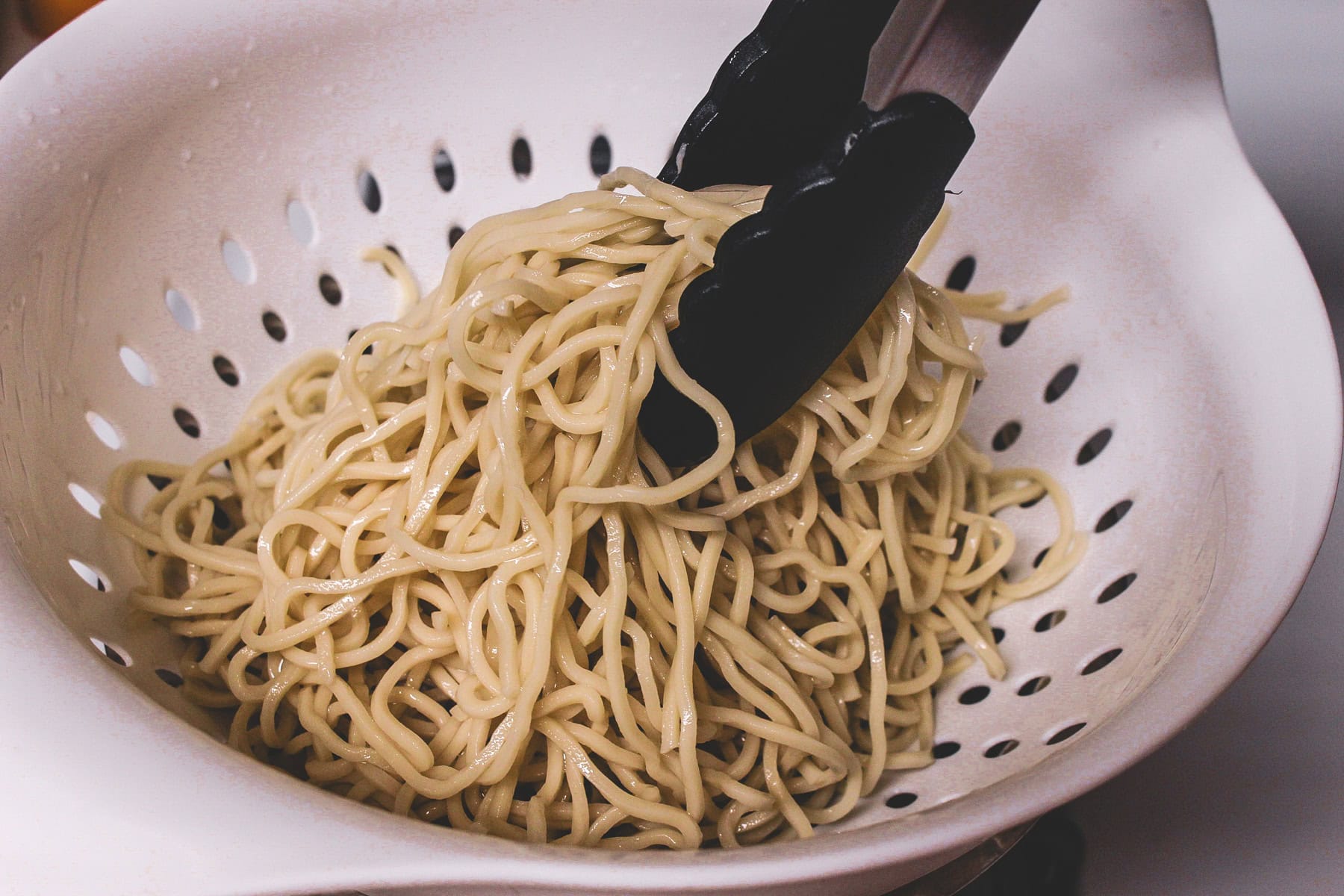
  • and toss gently with a fork or your hands until every strand is lightly coated. Set aside. This is the step that guarantees separate, glossy noodle strands rather than a clumped mass.
    Tossing noodles to coat oil evenly.
  • Prep All Vegetables: Make sure all vegetables are cut and ready in separate small bowls or piles before you start cooking.
    Measure out the soy sauce, chili sauce, salt, and pepper and keep them together.
    Keep the spring onion greens and vinegar separate (they go in last).
  • Heat the Wok/Cast Iron Pan Until Very Hot: Heat a large wok or wide cast iron pan on medium-high heat. Let it heat for at least 1–2 minutes until it is properly hot. Add the 3 tablespoons of oil. Let the oil heat for about 30 seconds.
    This is the most important step for restaurant-style flavor. A properly preheated wok and hot oil is what creates the characteristic slightly smoky, dry flavor of good hakka noodles — called "wok hei" (breath of the wok). A pan that's not hot enough causes everything to steam and stew instead of stir-fry, which is why home versions often taste flat and wet.
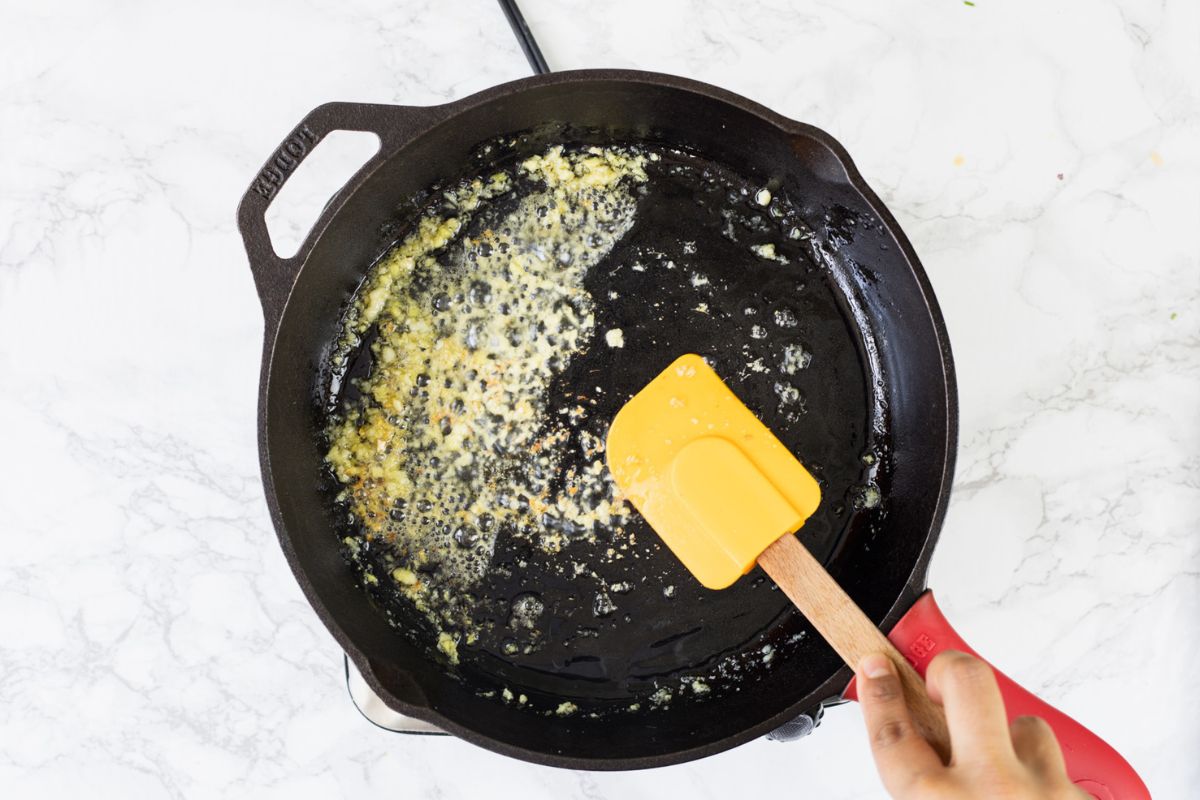
  • Sauté Ginger and Garlic: Add the minced ginger and garlic to the hot oil all at once. Stir and sauté for exactly 1 minute, stirring constantly. The garlic should turn fragrant and just barely golden at the edges — not brown, not burnt. Burnt garlic will make the entire dish bitter.
    Sauteing ginger garlic in a cast iron pan.
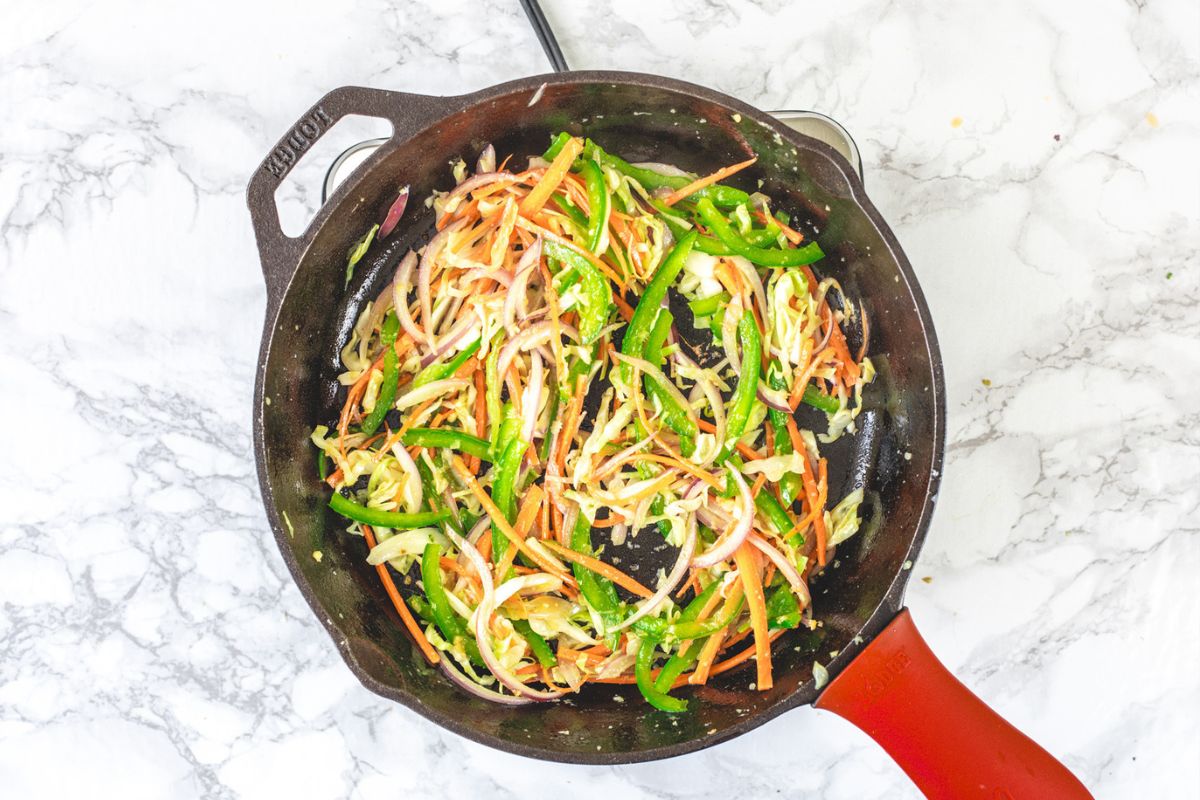
  • Stir-Fry the Vegetables: Add all the vegetables at once — onion, cabbage, green bell pepper, and carrot. Toss and stir-fry on medium-high heat for 4–5 minutes, stirring and tossing frequently. The vegetables should soften slightly but still have a firm bite — you want crisp-tender, not soft and limp.
    Sauteing veggies for veg hakka noodles.
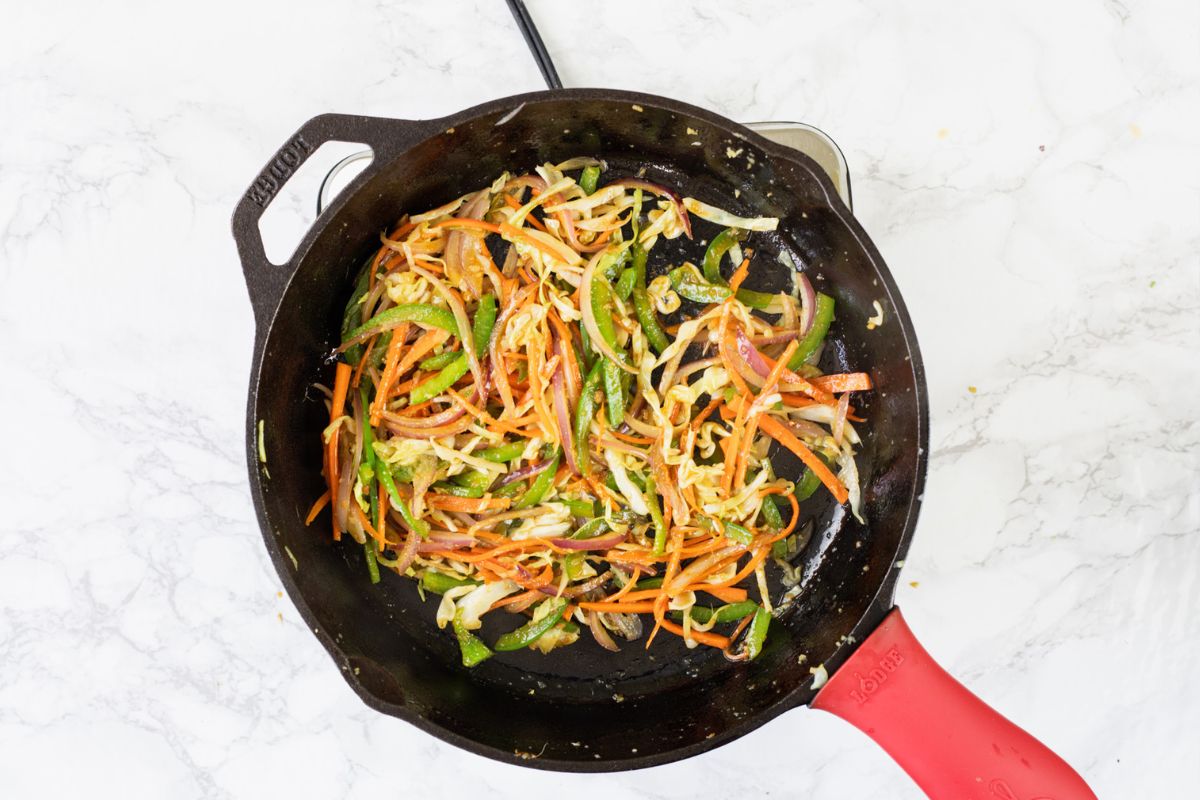
  • Add the Sauces: Add the soy sauce, chili sauce, salt, and black pepper powder. Toss everything together quickly so the sauces coat all the vegetables evenly.
    Taste a small piece of vegetable — it should taste lightly seasoned and flavorful. Adjust salt or chili at this point if needed.
    Sauces are added and tossed.
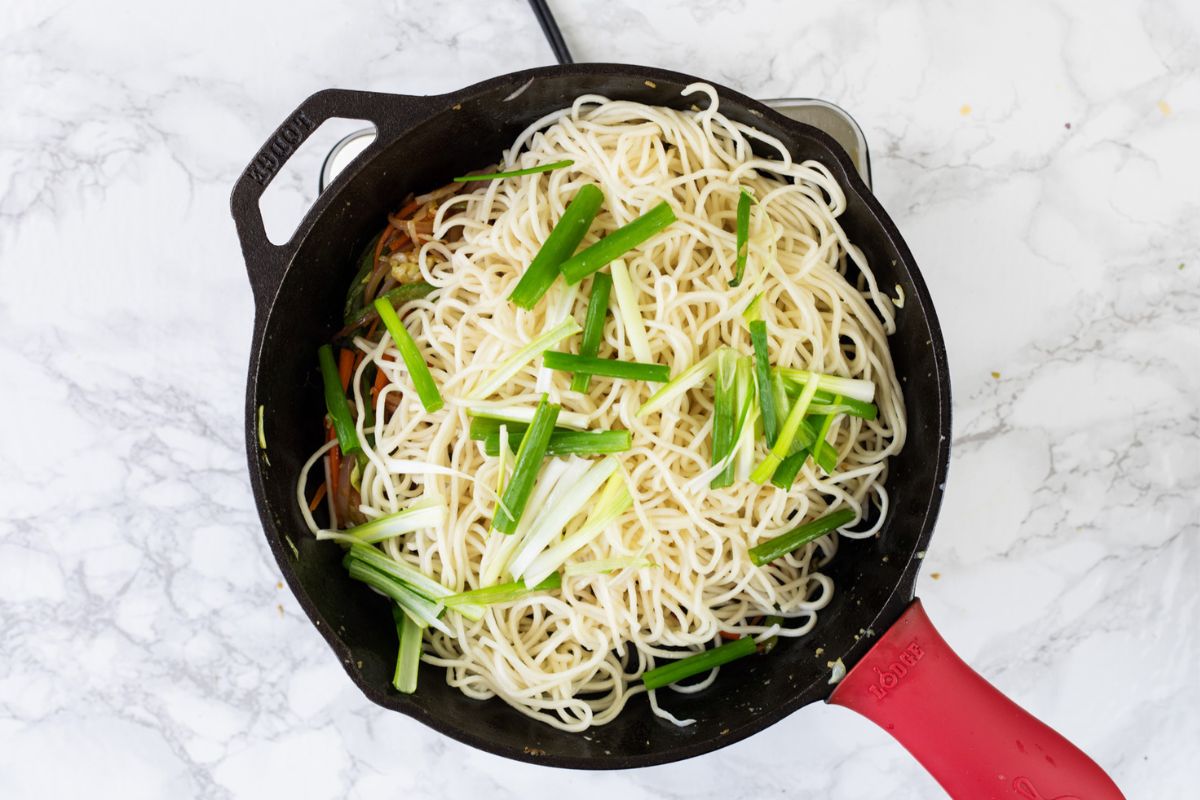
  • Add Noodles, Spring Onions, and Vinegar: Add the prepared noodles, spring onion greens, and vinegar all at once.
    Adding noodles and spring onions in the pan.
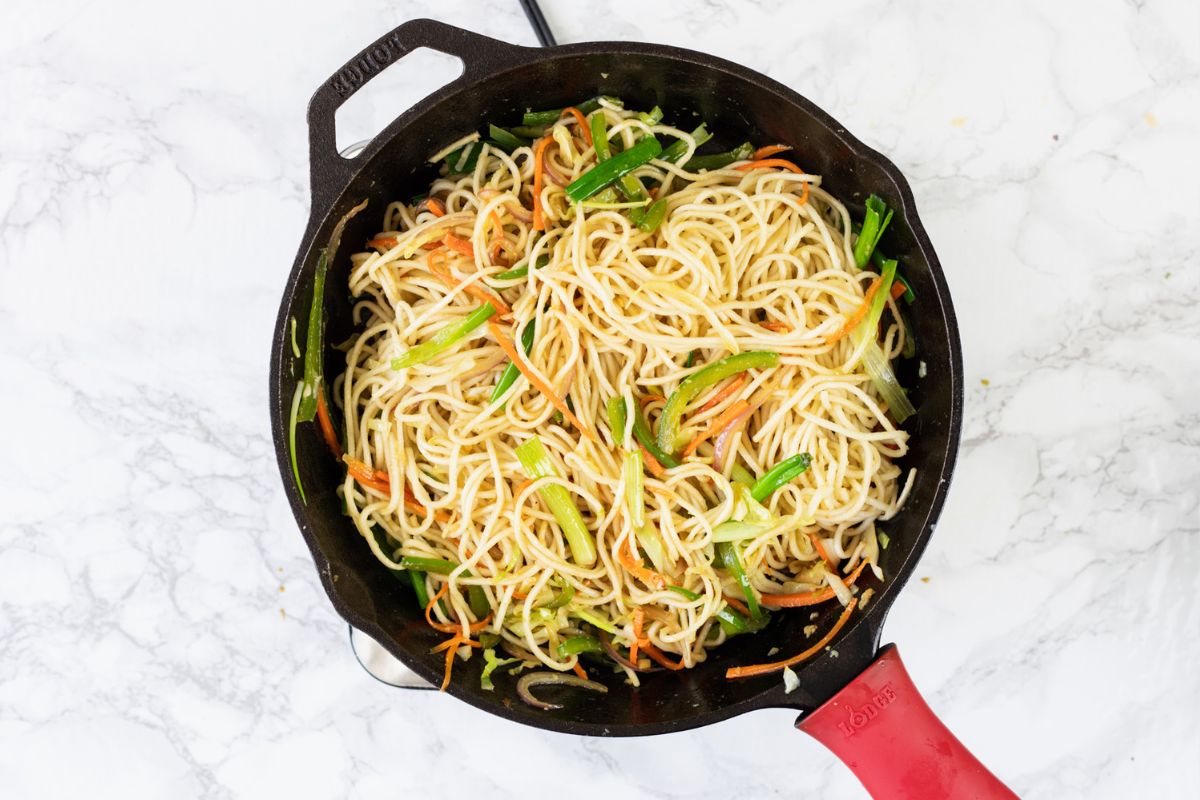
  • Using tongs or two large spoons, toss everything together until the noodles are evenly coated with the sauce, mixed through with the vegetables, and heated through.
    Ready veg hakka noodles in a cast iron pan.

Notes

  • Be careful not to over-toss noodles — too much mixing breaks the noodle strands. Toss confidently but gently.
  • Hakka noodles are always best hot, straight from the wok.
  • High heat, always. Stir-frying on medium or low heat steams the vegetables instead of frying them. Use the highest heat your stove can give for the vegetable and noodle stage.

Nutrition

Calories: 384kcal (19%) | Carbohydrates: 41g (14%) | Protein: 7g (14%) | Fat: 22g (34%) | Saturated Fat: 6g (30%) | Polyunsaturated Fat: 5g | Monounsaturated Fat: 10g | Sodium: 1397mg (58%) | Potassium: 330mg (9%) | Fiber: 3g (12%) | Sugar: 5g (6%) | Vitamin A: 3798IU (76%) | Vitamin C: 31mg (38%) | Calcium: 51mg (5%) | Iron: 3mg (17%)

💡 Expert Tips for Boiling Noodles

  • Cook noodles al dente — never fully cooked. Slightly undercooked noodles will finish cooking in the wok. Fully cooked noodles go into the wok and immediately become mushy.
  • Rinse noodles under cold water immediately after boiling. This is non-negotiable. Cold water stops the cooking and removes the sticky starch that causes clumping. Do not skip this.
  • Toss noodles in oil before setting aside. This is the secret to individual, non-sticky noodle strands. Every strand should be lightly coated.

💡 Expert Tips for Restaurant-Style Hakka Noodles
  • High heat, always. Stir-frying on medium or low heat steams the vegetables instead of frying them. Use the highest heat your stove can give for the vegetable and noodle stage.
  • Mise en place is everything. In a stir-fry, the cooking goes from zero to done in minutes. You will not have time to chop or measure anything once the wok is hot. Have every single ingredient prepped, measured, and within arm’s reach before you turn on the stove.
  • Don’t overcrowd the wok/pan. For 2-3 servings, a large 12-inch wok or wide pan works well. If you double the recipe, use a very large wok or cook in two batches. An overcrowded wok drops temperature and causes steaming rather than frying.
  • Cut vegetables uniformly thin. The size of your vegetable pieces should roughly match the thickness of the noodle strands. This gives you a cohesive bite where noodle and vegetable cook at the same rate and look like they belong together.
  • Add vinegar at the very end. Vinegar loses its brightness quickly when cooked. Adding it at the very last moment gives you the most impact from that characteristic tangy note.
Veg hakka noodles in a bowl with forks and manchurian served in the back.

🔄 Variations – Veggies & Protein

  • Add protein — Paneer: Cut firm paneer into thin strips or small cubes. Sauté separately in a little oil until lightly golden, then add to the wok in Step 10 along with the noodles.
  • Add protein — Tofu: Use extra-firm tofu, pressed and cubed. Pan-fry until golden and crispy, then add at the end. Makes this an even more filling vegan meal.
  • Add more vegetables: Mushrooms (button or cremini), baby corn, broccoli florets, bean sprouts, or bamboo shoots all work well. Add denser vegetables like broccoli and baby corn early along with rest veggies; softer ones like bean sprouts go in with the noodles at the end.
  • Sesame oil finish: Add ½ teaspoon of toasted sesame oil right at the very end, off the heat, for an additional layer of nutty aroma. This is optional but it absolutely elevates the dish.

🍽️ What to Serve with Hakka Noodles

Veg hakka noodles are a complete meal on their own, but they are also the centerpiece of a proper Indo-Chinese spread. Serve them with:

🧊 Storage Instructions

  • Best eaten fresh: Hakka noodles are at their best straight from the wok, hot and fresh. The vegetables lose their crispness as they sit, and the noodles absorb the sauce and can become sticky.
  • Refrigerator: Leftovers keep in an airtight container for up to 2 days. The flavor actually stays good — it’s mainly the texture that changes.
  • Reheating: The best way to reheat is in a hot wok or pan with a tiny drizzle of oil and a splash of water. Toss on high heat for 2 minutes — this refreshes the noodles and warms them through without making them soggy. Avoid the microwave — it makes the noodles rubbery and the vegetables wet.
  • Freezing: I do not recommend freezing hakka noodles. The noodles become mushy and the vegetables lose all texture after freezing and thawing.
  • Make-ahead tip: The best strategy is to boil and oil the noodles and prep all the vegetables up to 4 hours in advance. Store them separately (noodles in one container, cut vegetables in another) in the refrigerator. When ready to eat, the stir-frying takes under 10 minutes.
A bowl of veg hakka noodles with two forks on a napkin.

❓ Frequently Asked Questions

Yes! If you don’t have Ching’s hakka noodles, use any thin wheat noodle — lo mein noodles, thin ramen (discard the seasoning), rice noodles, or even regular spaghetti. The final texture will be slightly different but the flavor will be just as good. Spaghetti specifically works surprisingly well as a substitute

Two things cause sticky, clumped noodles:

  1. not rinsing under cold water immediately after boiling — this removes the surface starch that causes sticking; and
  2. not tossing the noodles in oil before setting them aside. Do both of these steps and your noodles will be separate and glossy every time

Soggy vegetables are the result of heat that’s too low. When the heat isn’t high enough, vegetables release their moisture and steam instead of stir-fry. Use the highest heat your stove can give for the stir-frying stage, don’t cover the pan, and keep the vegetables moving constantly. 4–5 minutes is all they need.

Yes — use the widest, heaviest pan you have. A 12-inch cast iron skillet or a wide stainless steel pan works well. The key is getting the pan very hot before adding oil and ingredients. A wok is ideal because of its shape (high sides allow tossing without spilling), but it is not mandatory.

Absolutely! Replacing the chili sauce with 1½ tablespoons of Schezwan sauce gives you a bold, spicy, deeply flavored Schezwan hakka noodles — a hugely popular variation. This is actually my family’s favorite way to make them.

Hakka noodles dry out when the sauce ratio is too low. Make sure you’re using the full amounts of soy sauce and chili sauce. Toss quickly after adding sauces to coat everything evenly before the sauce evaporates in the hot pan. The 3 tablespoons of oil also help keep the noodles moist and glossy. If eating later, reheat with a splash of water in a hot pan.


More Indo-Chinese Recipes to Try

Did you try this veg hakka noodles recipe? I’d love to hear how it turned out! Leave a star rating and a comment below. If you’re sharing on Instagram, tag me@spice.up.the.curry — I love seeing your recreations!

Plus, Subscribe to my newsletter and follow along on Pinterest, Instagram, and Facebook for all the latest updates.

5 from 1 vote (1 rating without comment)

Leave a Reply

Your email address will not be published. Required fields are marked *

Recipe Rating


This site uses Akismet to reduce spam. Learn how your comment data is processed.