
Pesarattu (Green Moong Dosa)

Crispy on the edges, thin, and loaded with protein — Pesarattu is the Andhra breakfast that needs no fermentation and no planning beyond an overnight soak. The greenest, healthiest dosa you will ever make.
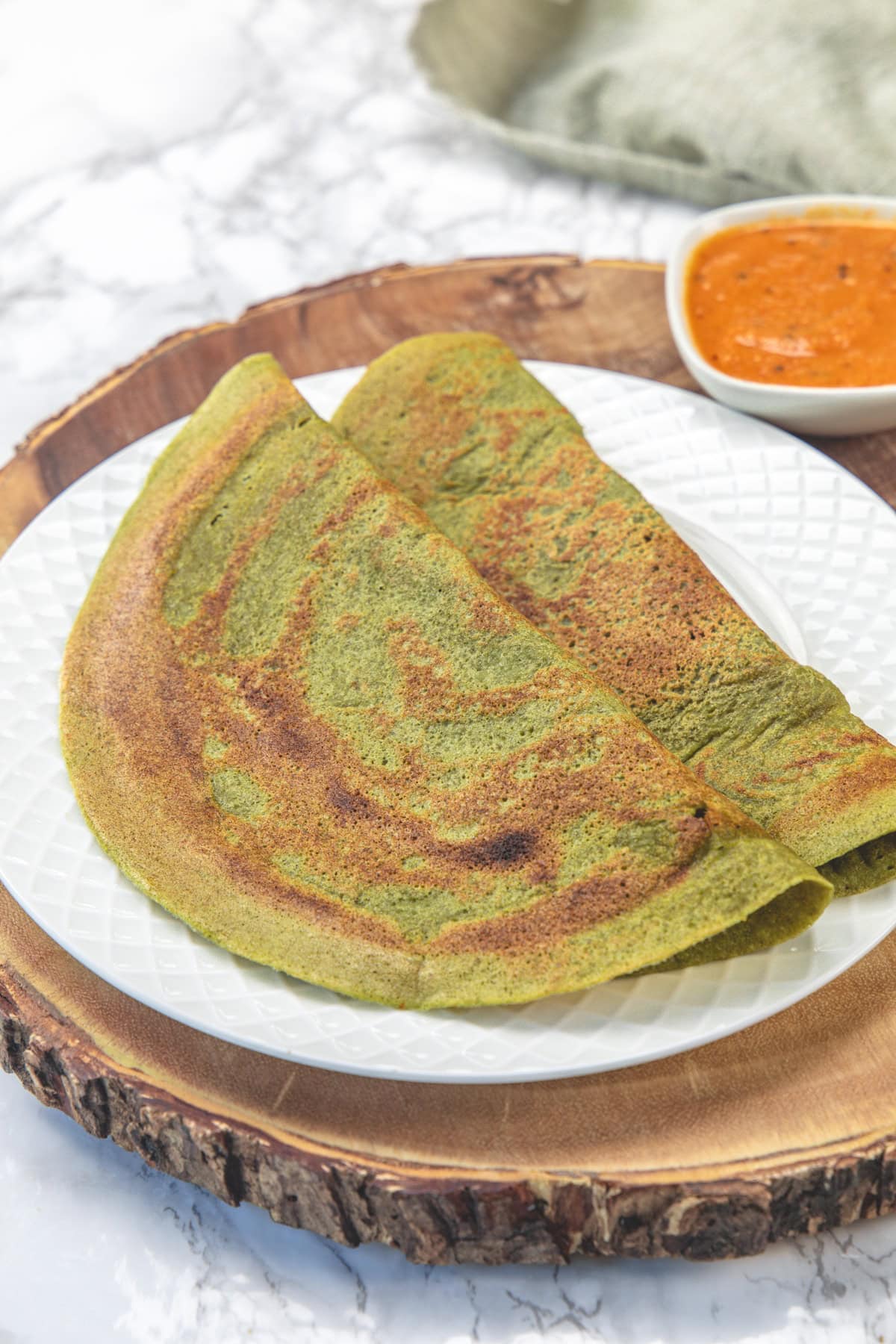
What is Pesarattu?
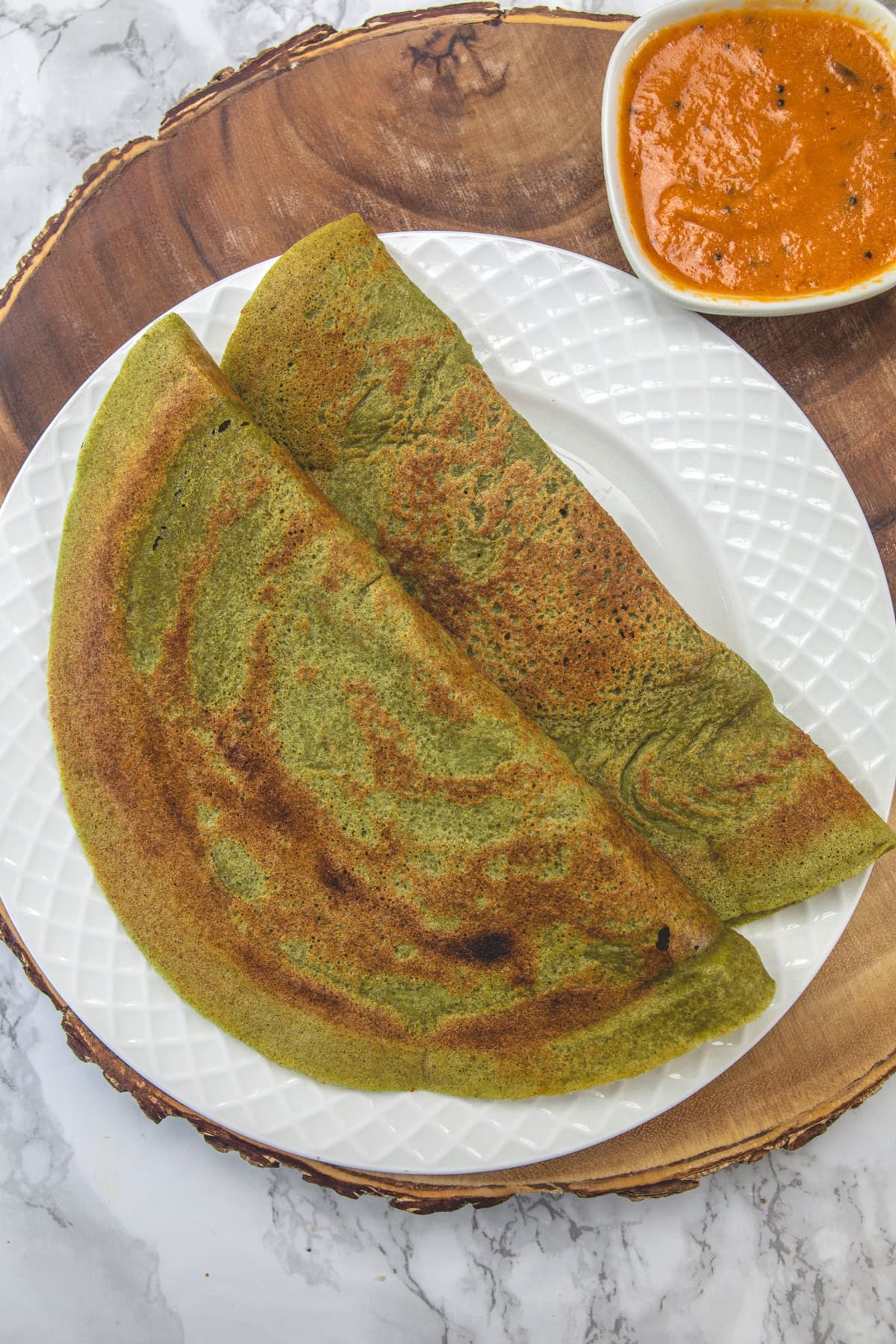
Pesarattu is a traditional Andhra Pradesh breakfast dosa made entirely from whole green moong (mung beans), with a small amount of rice for crispiness, and spiced with ginger, green chilies, cumin, and hing. It has a distinctive green color that comes from the natural pigment of whole green moong — no artificial coloring.
The name: In Telugu, pesara (or pesalu) means green gram (moong), and attu means dosa or crepe. So pesarattu literally translates to “green moong dosa.” It is also called pesara attu, pesara dosa, and green moong dosa across different regions.
Origin: Pesarattu is especially popular in the coastal districts of Andhra Pradesh — Guntur and the Godavari region. It has been a staple Andhra tiffin for centuries, beloved for being filling, naturally high in protein, and incredibly simple to make. Today it is popular across all of South India and widely made in homes around the world.
Another Variation is MLA Pesarattu: MLA Pesarattu is the most famous variation — named after the MLA Quarters restaurant in Hyderabad, Andhra Pradesh. In MLA pesarattu, the dosa is either stuffed with rava upma (like masala dosa) or served alongside a mound of upma. The combination of crispy green moong dosa and soft, warm upma became so beloved that it spread across Andhra and beyond.
Pesarattu vs Dosa — What is the Difference?
|
Pesarattu |
Regular Dosa |
|
|---|---|---|
|
Base Ingredient |
Whole green moong dal |
Rice + Urad dal |
|
Fermentation Needed |
No |
Yes (8-12 hours) |
|
Spices in batter |
Yes (ginger, chili, cumin) |
No |
|
Color |
Natural green |
White/cream |
|
Protein content |
High |
Moderate |
|
Texture |
Slightly thicker |
Mostly thin and crispy |
The no-fermentation point is the most practical difference for home cooks. You can decide to make pesarattu the night before (just soak the moong) and have it ready in 20 minutes the next morning.
⭐ Why You’ll Love This Recipe
Ingredient Notes
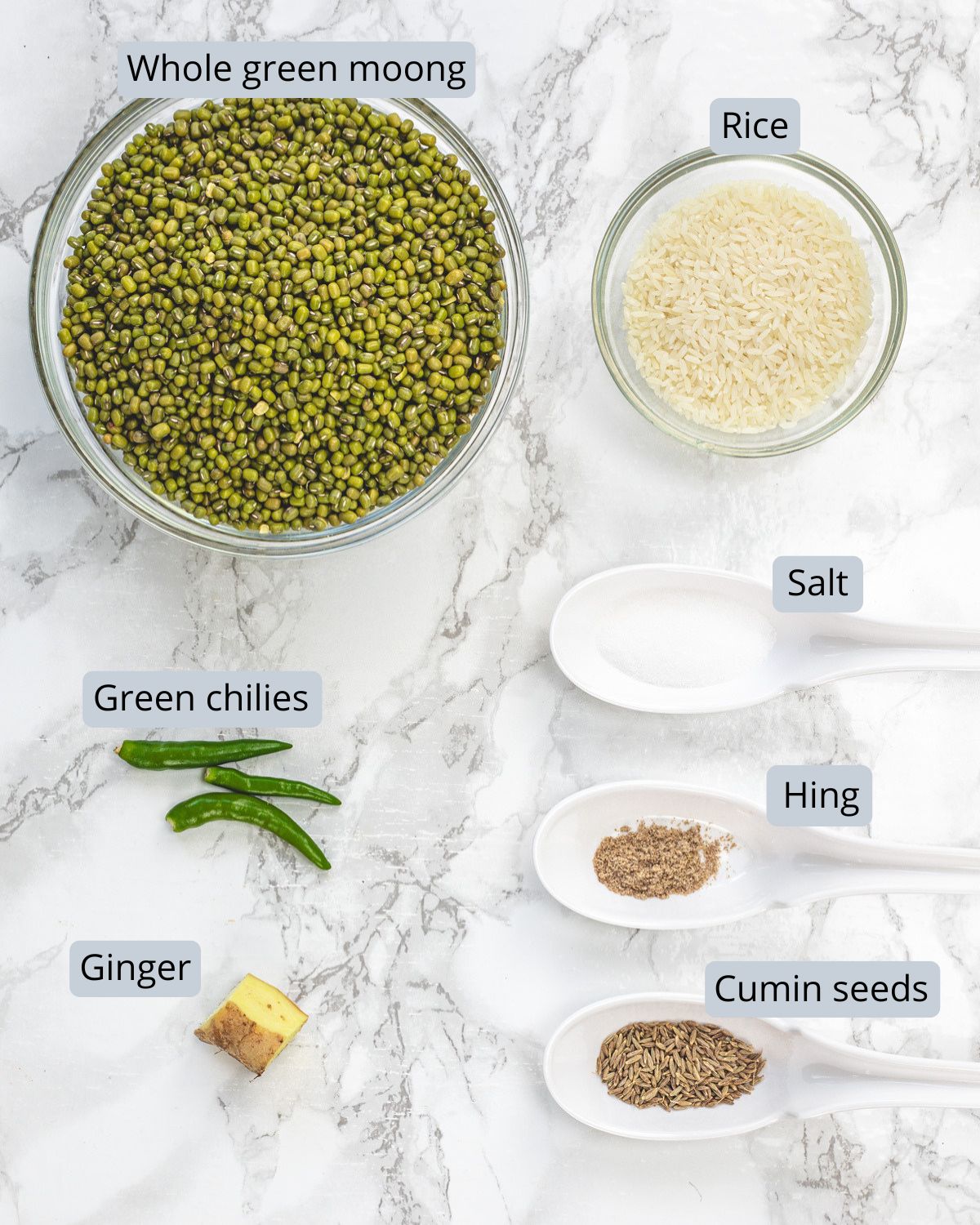
Complete list of ingredients and amounts is written in the recipe card below.
Tried this recipe? A star rating ⭐️ and a quick comment below help others (and me!) know how it went.
Pesarattu Recipe (Green Moong Dosa)
US measuring cups are used (1 cup = 240 ml)
Ingredients
- 1 cup Whole green moong dal (Green gram dal)
- 2 tablespoons Sona masoori rice, long grain rice works as well
- ½ inch Ginger
- 2-3 Green chilies
- ½ teaspoon Cumin seeds
- ¼ teaspoon Hing (Asafoetida)
- 1 teaspoon Salt, or to taste
- 1 cup Water, for grinding
- Oil, to cook pesarattu
Instructions
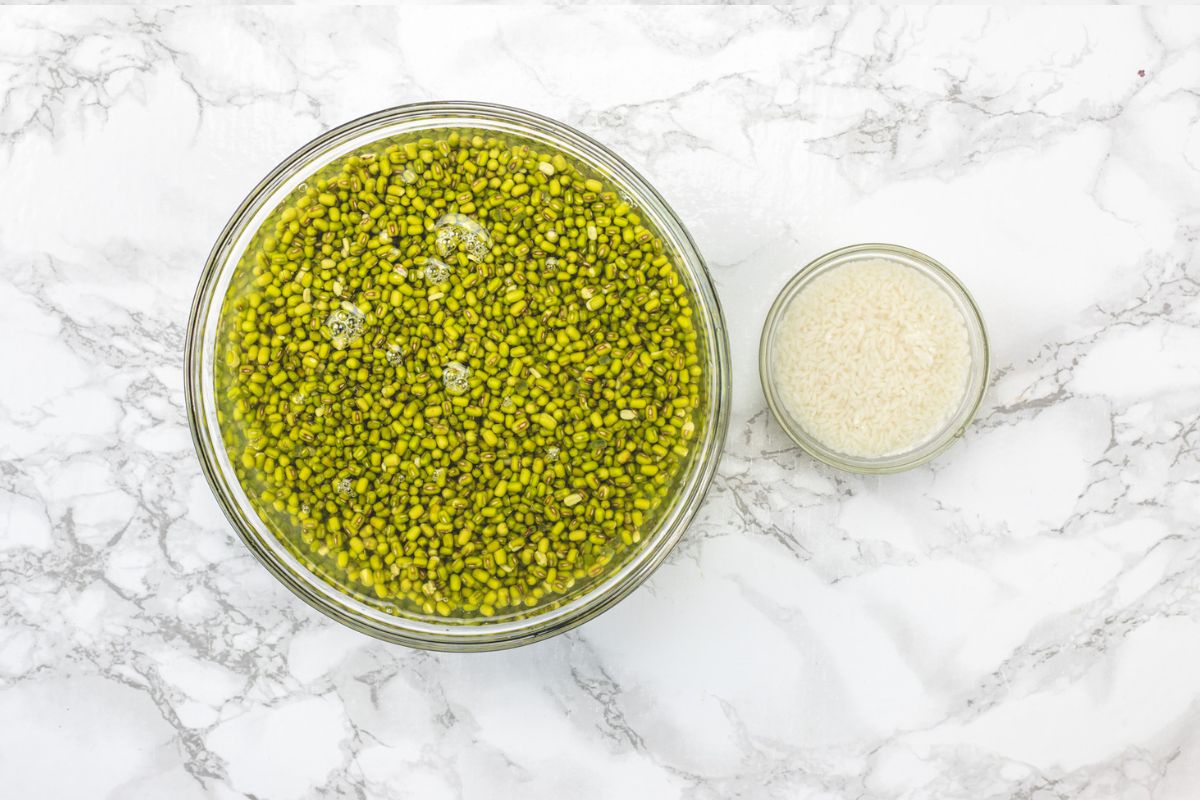
- Wash & Soak: Add the whole green moong dal and rice to a large bowl. Wash 2–3 times, rubbing the grains together, until the water runs mostly clear. Drain.Soak in enough water (2-3 inches above the lentils) for 6–8 hours or overnight. The moong will swell to nearly double its size. 💡 TIP: Do not soak for less than 6 hours — under-soaked moong doesn't grind smoothly.

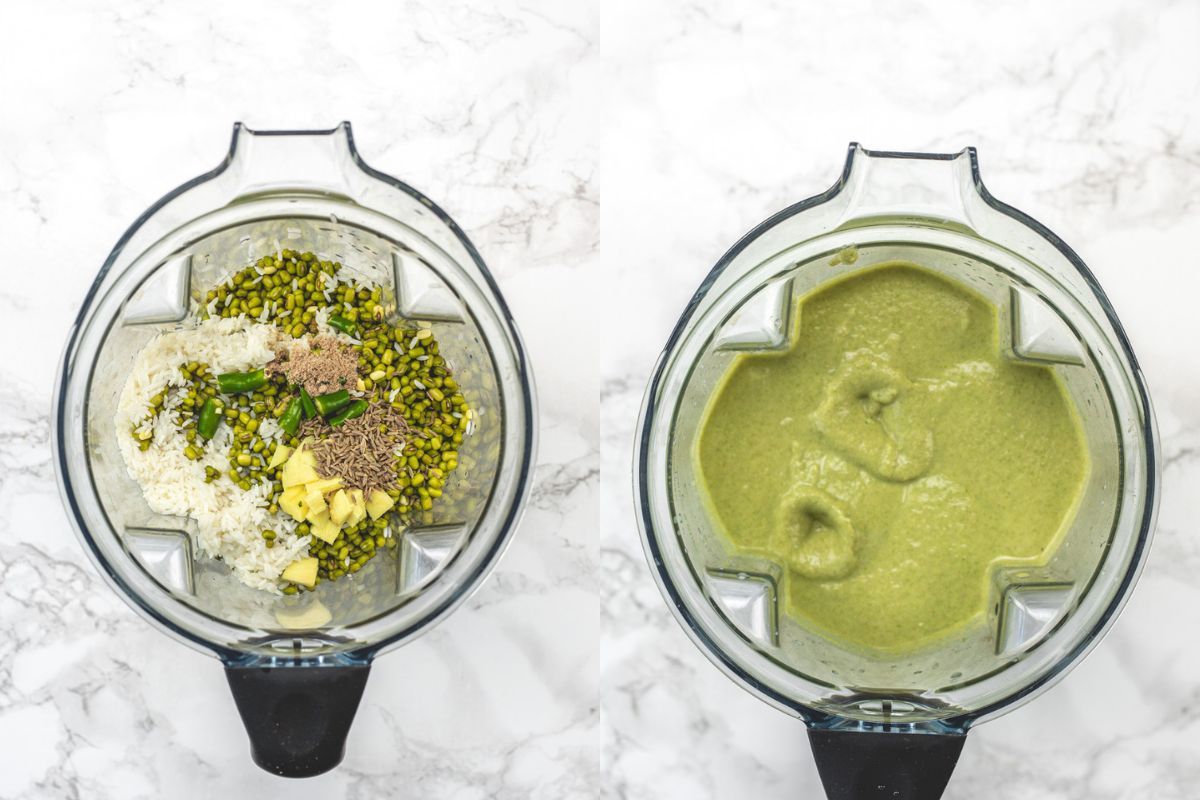
- Grind the Batter: Drain all the soaking water completely. Transfer the soaked moong and rice to a blender jar. Add the ginger, green chilies, cumin seeds, hing, and salt. Add ¾-1 cup fresh water and blend until smooth. Pour into a bowl. 💡 TIP: Discard the soaking water and grind with fresh water. Soaking water contains the oligosaccharides (complex sugars) leached from the moong that can create bloating. Fresh water gives you a cleaner-tasting, easier-to-digest pesarattu.
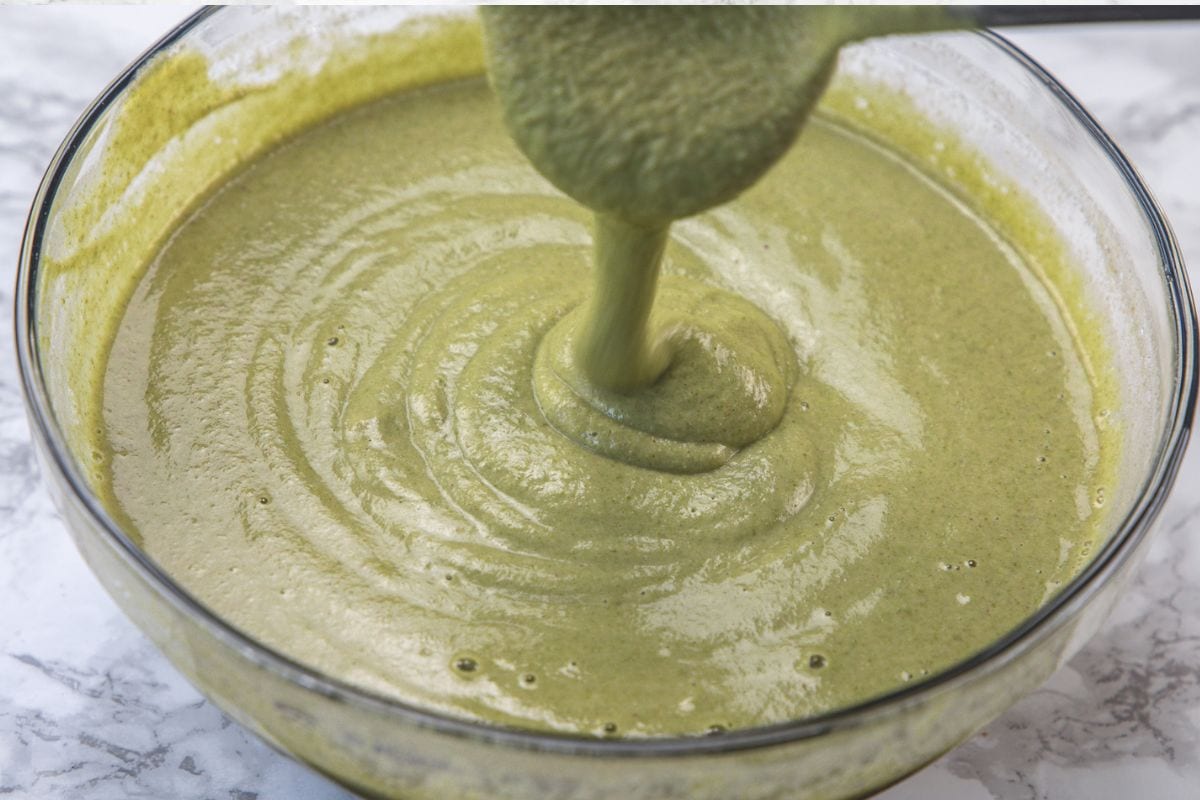
- Check Batter Consistency: The batter should be a medium-thick, pourable consistency — like regular dosa batter.Taste and adjust salt if needed. No resting time required — cook immediately.
- Heat the Tawa: Place a cast iron tawa or heavy flat pan on medium heat. Let it heat properly — this takes 3–5 minutes for cast iron. The tawa is ready when a drop of water sprinkled on the surface sizzles and evaporates immediately.If this is your first dosa on a freshly cleaned tawa, rub a half-cut onion over the surface or wipe with a paper towel dipped in oil to season it. A well-seasoned tawa needs no additional oil at the start.
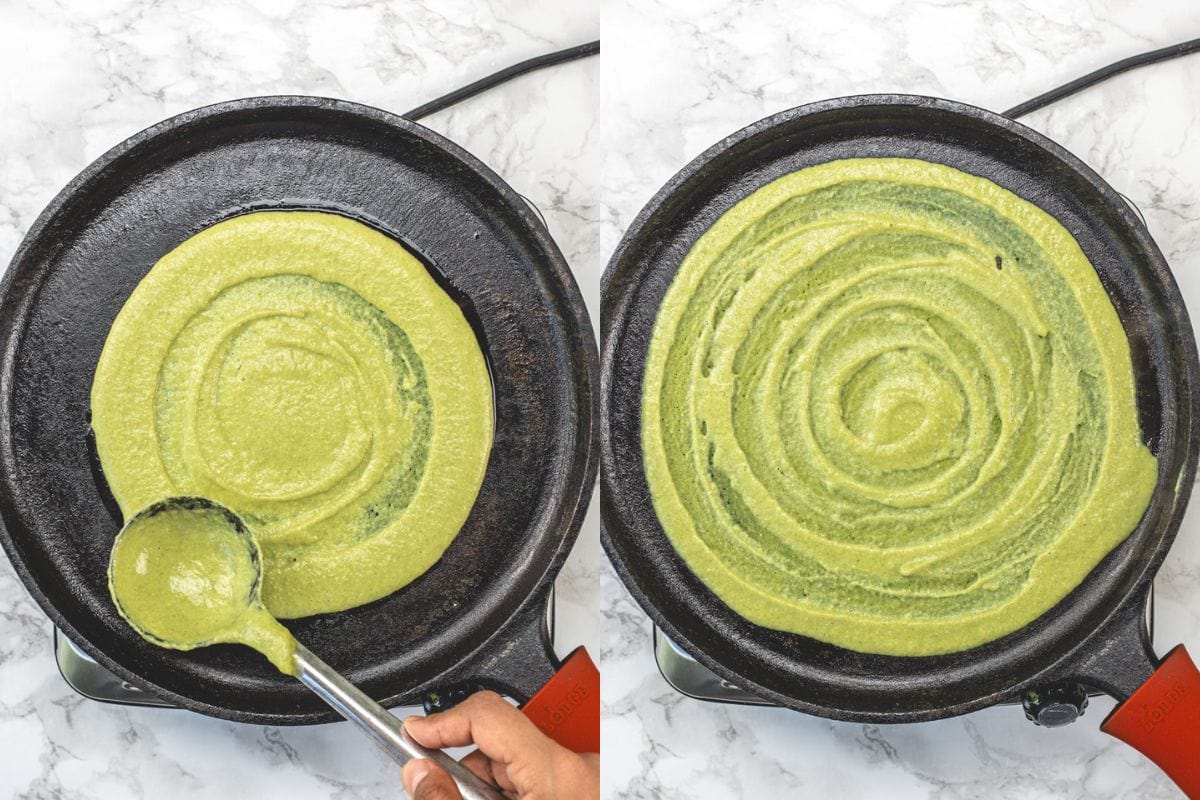
- Pour & Spread: Take approximately ¼ cup (one full ladle) of batter. Pour it onto the center of the hot tawa. Immediately use the back of the ladle to spread it outward in concentric circles. Work quickly.Keep the pesarattu at medium thickness — not paper-thin like a paper dosa, and not thick like an uttapam.
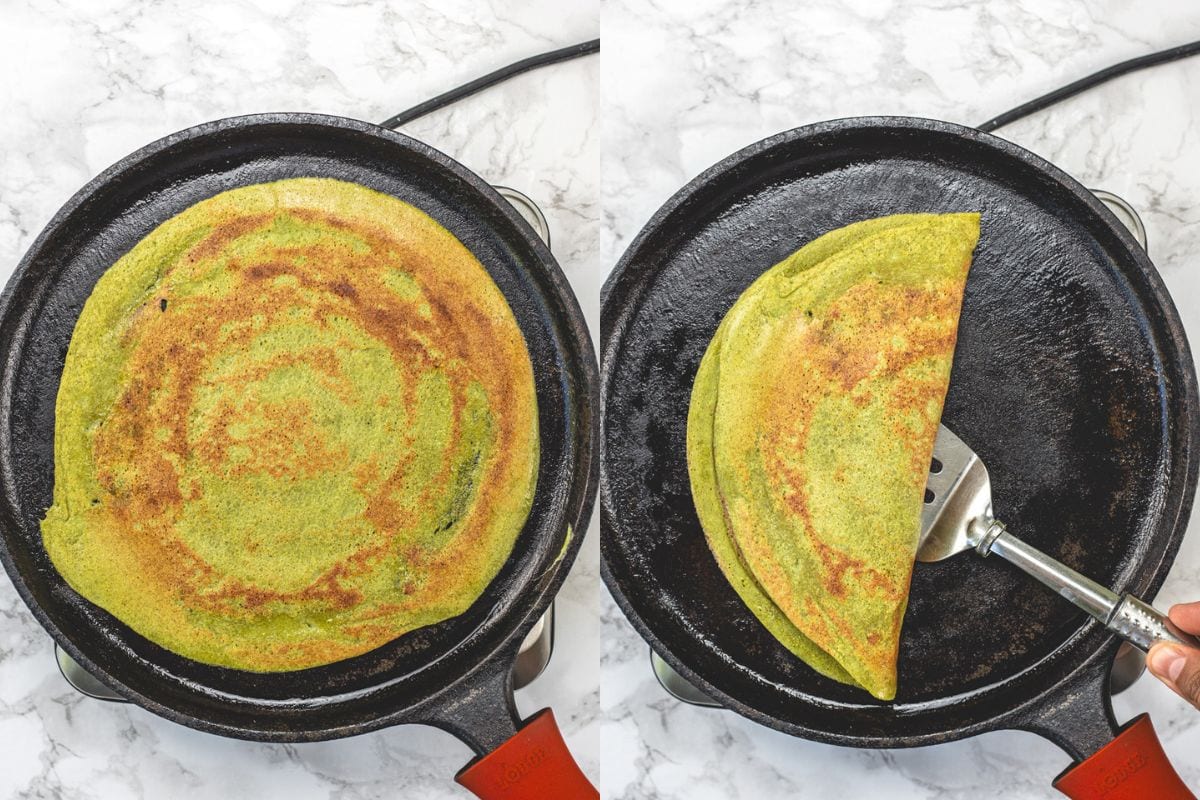
- Oil, Cook, Flip & Finish: Drizzle a teaspoon of oil around the edges of the pesarattu and a few drops on the top surface. Cook on medium heat. As the pesarattu cooks, you will see the edges start to turn golden and lift away from the tawa — this is your signal that the bottom is cooked.Flip using a flat spatula. Cook the second side for just 30–45 seconds. The second side only needs a brief cook — it doesn't need to be golden.Remove and serve immediately. Pesarattu is always best hot off the tawa.Repeat with remaining batter, adjusting the heat between dosas if needed.
Notes
- Soak fully — 6 hours minimum. Under-soaked moong doesn’t break down properly during blending and gives you a gritty batter that is both hard to spread and doesn’t crisp up well. Overnight soaking always gives the best results.
- Medium heat is the key temperature. Too high: the batter sets before you can spread it and burns at the edges. Too low: the pesarattu steams and stays pale and soft rather than crisping. Medium heat gives you time to spread and then crisp properly.
- Cool the tawa slightly between dosas if it overheats. Wipe the hot tawa with a damp cloth or sprinkle a little water between each dosa to bring the temperature back down. An overheated tawa makes batter spread uneven and burn at the edges.
Nutrition
🍽️ What to Serve with Pesarattu
The traditional Andhra combination:
- Allam pachadi (ginger chutney) — the most authentic and most popular accompaniment. The fiery, slightly sweet ginger chutney is Essential for the real Andhra experience.
- Upma — either on the side or stuffed inside (MLA style). The combination sounds unusual to outsiders but is one of those pairings that makes complete sense once you taste it.
Other excellent accompaniments:
- Coconut chutney — the second most popular pairing, milder and cooling
- Tomato chutney — tangy and bold, complements the moong beautifully
- Sambar — classic South Indian dipping option
- Plain yogurt with a pinch of salt — a simple, cooling accompaniment
🧊 Storage
❓ Frequently Asked Questions
More South Indian Breakfast Recipes
Did you try this pesarattu recipe? Leave a star rating and a comment below! I’d love to know if you made it with the classic ginger chutney or the MLA upma stuffing. Tag me on Instagram @spice.up.the.curry

Very tasty and prepared the same at home everybody loved it. Hope to receive more recipes to prepare yummy breakfast for family.
Thank you so much! 😊 I’m so happy to hear everyone loved it. I’ll definitely keep sharing more easy recipes.